
Lisbon’s city government froze new short-term rental licenses in its most-visited neighborhoods in 2026 — Alfama, Santa Maria Maior, Mouraria, and others. In 2026, that cap has created a split market: established properties with legal operating history, and newer listings in a compliance gray area. The platform you choose determines how much of that risk lands on you.
This breakdown covers what Airbnb and VRBO each actually do for you — fraud protection, host verification, and cancellation coverage — when booking a month-long stay in Lisbon.
Platform Comparison at a Glance
| Feature | Airbnb | VRBO |
|---|---|---|
| Active Lisbon listings (2026 estimate) | 15,000+ | 2,000–3,500 |
| Guest service fee | 14–16% of booking subtotal | 6–12% booking fee |
| Guest protection program | AirCover | Book with Confidence Guarantee |
| Host ID verification | Government ID + selfie match required | Required, regional enforcement varies |
| AL license number displayed | Required by Airbnb for Portuguese listings | Inconsistently shown or absent |
| Long-stay discount (28+ days) | Host-set, commonly 20–35% off nightly rate | Host-set, less consistent |
| Rebooking support if host cancels | Yes — AirCover covers cancellations within 30 days of check-in | Yes — but constrained by smaller inventory |
VRBO’s service fee is lower — sometimes by 4–8 percentage points. On a €2,000 monthly booking, that is a real €80–160 difference. But Airbnb’s inventory advantage means better filtering options and more fallback options when something breaks down.
Bottom Line: The fee math favors VRBO. Everything else about Lisbon specifically favors Airbnb.
How Scams Work on Each Platform in Lisbon
Both platforms have fraud problems. The mechanics differ, and knowing them changes how you vet a listing before committing a month’s rent.
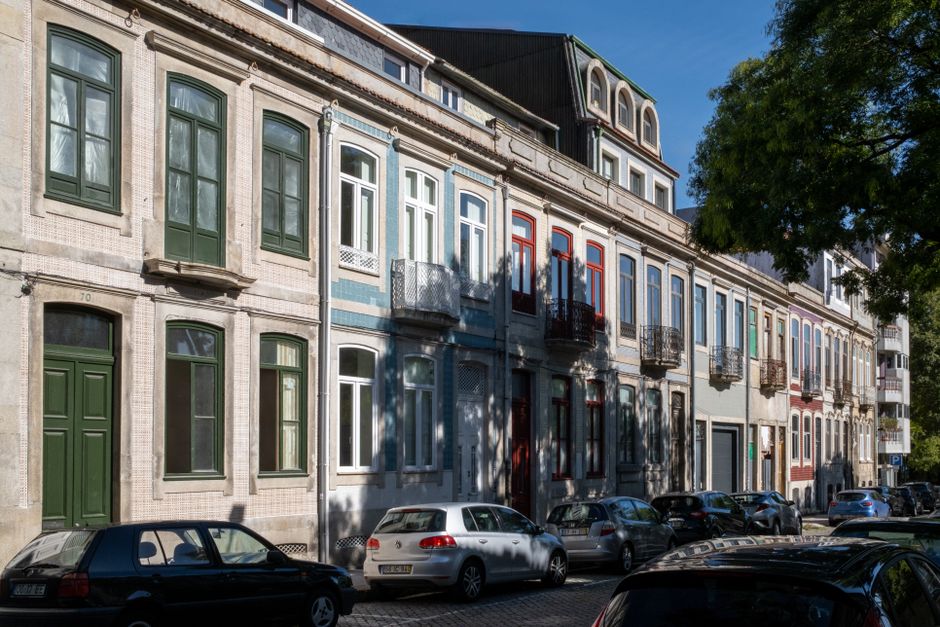
The most common Airbnb scam in Lisbon involves neighborhood misrepresentation. Lisbon’s geography is vertical — a listing in Graça and one in Chiado can be 1.2 kilometers apart but separated by a 100-meter elevation change and a 20-minute uphill walk. Hosts exploit this by placing their map pin at a neighborhood boundary. A property advertised as Príncipe Real might sit three blocks into Rato parish. Once a booking is initiated and the exact address is released, cross-check it in Google Maps before confirming.
The second major Airbnb issue is WiFi exaggeration. Pre-war buildings — covering most of Alfama, Mouraria, and parts of Graça — often run on copper-line internet infrastructure. A listing in these buildings may claim high-speed fiber when the actual connection is 20–40 Mbps ADSL. For reliable video calls, you need at minimum 10 Mbps upload. For most remote workflows, 25 Mbps symmetrical is the practical floor. Ask any Lisbon host for a Speedtest.net screenshot, timestamped, from inside the apartment. If they decline, treat that as a no.
On VRBO, the risk profile is different. With 2,000–3,500 Lisbon listings, thin review histories are common and statistically less meaningful. A VRBO property with 6 reviews carries weaker trust signal than an Airbnb listing with the same count — lower overall volume means less review pressure filtering out bad actors. Also, a larger share of VRBO Lisbon listings are managed by property management companies rather than individual owners. When something goes wrong at 11pm, you are calling a company’s after-hours line, not an owner with personal stake in the resolution.
Off-platform payment requests are a red flag on both platforms. If a host asks you to pay via bank transfer, Revolut, or anything outside the platform — walk away. Platform payment holds are the mechanism that gives you dispute rights.
Red flags that apply regardless of platform:
- No AL license number displayed (legally required in Portugal)
- Reviews mentioning “not as described” or “location was different than expected”
- Host account under six months old with fewer than five completed stays
- WiFi described only as “fast” or “high-speed” with no speed test provided
- No photos showing the building exterior or street-level view
Bottom Line: Airbnb exposes you to neighborhood misrepresentation and WiFi inflation. VRBO exposes you to thin social proof and diffuse host accountability. Both risks are manageable with a consistent vetting checklist.
Always Verify the AL License Before Booking
Every legal short-term rental in Portugal must carry a Número de Registo — format AL-XXXXXX-XX — and display it on all public listings. You can cross-reference any AL number for free in the RNAL database (Registo Nacional do Alojamento Local), publicly searchable online. If a Lisbon listing does not show the number, ask the host directly. If they cannot produce it, move on. Properties without valid AL registration have no legal framework backing your stay, and disputes become significantly harder to resolve through any channel.
Airbnb now prompts Portuguese hosts to include this number, and most compliant listings display it automatically. VRBO does not enforce this with the same consistency. That asymmetry is a material safety difference — particularly in neighborhoods where the license freeze means some hosts are operating without current authorization.
Host Verification: What Each Platform Actually Checks

- Airbnb ID verification: Hosts submit a government-issued photo ID and complete a selfie-matching step. Airbnb cross-checks IDs against public watchlists in participating countries. New hosts cannot accept reservations before completing this, and verified status displays on their profile.
- VRBO host verification: Also requires identity verification, but regional enforcement consistency is lower. VRBO does not surface host verification status as visibly as Airbnb’s profile system does, making it harder to quickly confirm what steps were completed.
- Airbnb-verified listing badge: A separate program from host verification. Properties with this badge have undergone a physical inspection by a trained reviewer. Not universal across Lisbon — but worth filtering for when available, especially on stays over 21 days.
- AirCover vs. Book with Confidence Guarantee: Airbnb’s AirCover includes rebooking assistance if a host cancels within 30 days of check-in. VRBO’s Book with Confidence Guarantee covers cases where the listed property does not exist or you are locked out on arrival — but it does not cover properties that exist yet are significantly misrepresented. That gap matters when you have chosen a specific Lisbon location for specific work reasons.
Cancellation Policies Remote Workers Consistently Misread
Are Airbnb long-stay policies different from short-stay ones?
Yes, and most people discover this after booking. Airbnb’s policies for stays 28 days and longer function differently from standard short-stay cancellations. Under a Firm long-stay policy, canceling after the first 30 days means forfeiting the first month’s payment and receiving a 50% refund on remaining nights, minus service fees. Hosts can also set custom long-stay terms that override Airbnb’s platform defaults. Always read the cancellation section on the specific listing page — not Airbnb’s general policy overview.
What does VRBO cover when a host cancels last-minute?
VRBO’s Book with Confidence Guarantee will attempt to find a comparable replacement. With 2,000–3,500 active Lisbon listings, the word “comparable” does real work there. If you booked near Beato for proximity to Factory Lisbon co-working, VRBO’s substitute may be in an entirely different neighborhood. The guarantee is real, but its practical value depends on how flexible your location requirements are.
Which cancellation policy should you choose for a 30-day stay?
Moderate or Flexible — always, on either platform. Strict and Firm policies transfer nearly all cancellation risk onto you. Flexible listings typically cost 8–15% more than Strict equivalents on comparable properties. For a 30-day commitment in a foreign city, pay the difference.
Book the Monthly Rate and Nail Down the Terms in Writing

Both Airbnb and VRBO allow hosts to set monthly discounts for 28-day-plus stays. In Lisbon in 2026, monthly rates typically run 20–35% below what you would calculate by multiplying the nightly rate by 30. On a property with a €100 nightly rate, that is the difference between €3,000 and roughly €1,950–€2,400 for the month.
Use the platform messaging system — not email, not WhatsApp — to confirm the exact rate, included utilities, and that the host will not accept overlapping short-stay bookings during your period. Some Lisbon hosts simultaneously list on both short-term and longer-term channels and take whatever booking arrives first. Getting exclusive occupancy confirmed in writing protects you if a scheduling conflict surfaces mid-stay.
On Airbnb specifically, the Special Offer Request feature lets you propose a custom rate on stays that fall outside a host’s standard calendar pricing. Many Lisbon hosts negotiate on monthly rates during shoulder season — October through March — when occupancy pressure drops.
Which Platform to Book for Lisbon Remote Work
Use Airbnb. The decision is less about fees and more about what you need when things go sideways.
Airbnb’s inventory depth — 15,000+ Lisbon listings — lets you filter for what remote work actually requires: documented WiFi speeds, dedicated desk space, and proximity to co-working spaces like Second Home Lisbon at LX Factory in Alcântara, Heden in Chiado, or Factory Lisbon in Beato. VRBO’s inventory does not give you that granularity, and narrower search results mean more compromise on requirements that directly affect your ability to work.
AirCover’s host-cancellation protection also carries real practical value once you have already booked flights, signed up for a monthly transit pass, and paid a co-working deposit around a specific apartment address. VRBO’s equivalent protection is narrower and backed by a smaller inventory pool.
The one case where VRBO makes sense: you have found a specific property that lists on both platforms. Cross-check the all-in price on each and book through whichever is cheaper — but run the same verification steps regardless. Check the AL license number against the RNAL database, request a Speedtest.net screenshot, keep all communication on-platform, and choose Moderate or Flexible cancellation terms no matter what.
Platform policies, fees, and protection terms change. Verify current terms directly on Airbnb.com and VRBO.com before completing any booking. This is not financial or legal advice.