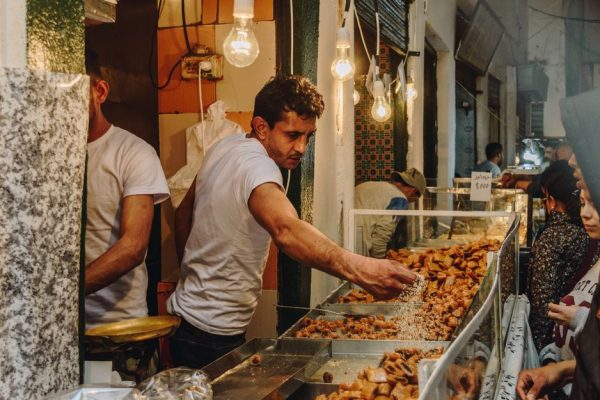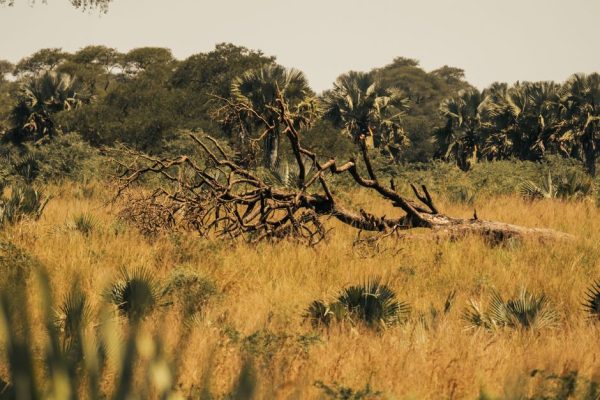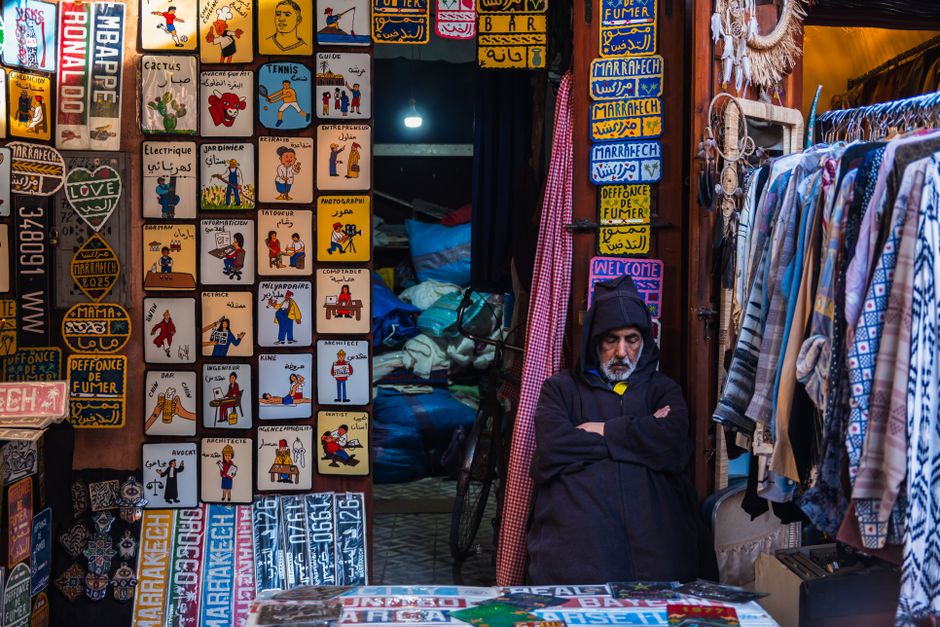
Marrakech can feel warm at lunch and cold enough for a coat by dinner. That daily temperature swing is the fact most first-time visitors miss. Winter brings daytime temperatures around 18–22°C in the city, chilly nights near 6–10°C, and snow on the High Atlas peaks. Pack for two climates and plan your days around daylight, not wishful thinking.
Why winter is the right time for Marrakech
Winter is the best season for a first Marrakech trip. The medina is easier to walk, the heat does not flatten you by noon, and the Atlas Mountains look sharper against a clear sky. December, January, and February also give you a useful excuse to slow down inside a riad courtyard when the evening turns cold.
What the weather actually feels like
Morning starts cold, especially on tiled streets before the sun reaches the medina. By midday, a shirt or light sweater often works. After sunset, you will want a proper jacket. Bring closed walking shoes, a thin layer, a warmer outer layer, sunglasses, sunscreen, and a small rain shell. Atlas villages sit much higher than Marrakech, so city clothing is not enough for a mountain day.
Rain is possible, and heavy weather can affect mountain roads. Do not treat a clear forecast in the city as proof that the road to Imlil or the Ourika Valley is fine. Ask your driver or hotel for a same-morning road update.
How to use the short winter days
Start sightseeing around 9:00, take lunch between 13:00 and 14:00, and keep outdoor attractions before late afternoon. In December, daylight fades soon after 17:00. January and February give you slightly more room, but the medina still becomes harder to navigate after dark. Keep the evening for dinner, the square, or a short walk near your riad.
Choose accommodation inside the medina if atmosphere matters most. Choose Gueliz if you want wider streets, modern restaurants, and easier taxi access. My pick for a four-day visit is a quiet riad within a 10-minute walk of Bab Laksour or Bab Agnaou. You get the old city without making every taxi driver search for your door.
Day 1: Get your bearings before the souks get loud
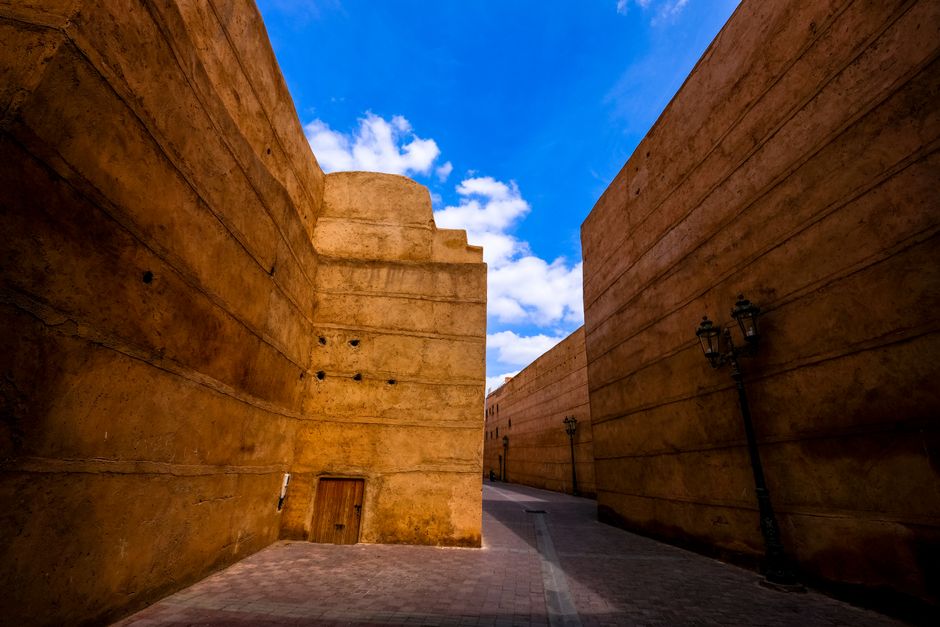
Do not attack the entire medina after landing. Marrakech rewards a controlled start. Your first job is learning the shape of the city, finding your accommodation again, and seeing the central landmarks before you begin shopping.
Morning: Koutoubia, Kasbah, and the main gates
- Leave your riad around 9:00 and walk to Koutoubia Mosque. Non-Muslim visitors cannot enter the prayer hall, but the exterior, minaret, and gardens give you the best first orientation.
- Continue south toward the Kasbah and Bab Agnaou. This route is calmer than the lanes around Jemaa el-Fnaa and gives you a cleaner introduction to Marrakech architecture.
- Visit the Saadian Tombs before lunch. Allow 45 minutes. The site is compact, so it fits neatly into your first morning.
- Eat near the Kasbah rather than buying your first meal from the busiest square. You will have better seating and less pressure while you learn local prices.
Afternoon and evening: Palace walls, then Jemaa el-Fnaa
After lunch, visit Bahia Palace and walk through the Mellah, the historic Jewish quarter. Bahia Palace is not a place to rush through in 20 minutes. Look at the ceilings, courtyards, zellige tilework, and the way rooms open toward shade. Two hours is enough without turning the visit into a design lecture.
Return toward Jemaa el-Fnaa before sunset. The square changes character as food stalls, musicians, juice sellers, and crowds fill the open space. Watch your belongings, ignore aggressive approaches, and agree on a price before accepting a photo or service. If someone handles your phone or camera without permission, leave.
For dinner, choose a stall with steady local traffic and visible cooking rather than the one with the loudest pitch. Spend roughly 40–100 MAD per person for a simple meal, depending on what you order. Keep the first night easy. You still have three days of walking ahead.
Day 3: Choose the Atlas trip you can actually finish
The Atlas Mountains are close to Marrakech on a map and slow by road. That distinction matters. A mountain day trip can take eight to ten hours once you add pickup, traffic, stops, lunch, and the return drive. Choose one valley and stay with it.
Ourika or Imlil?
| Route | Approximate distance | Drive each way | Best for | Main drawback |
|---|---|---|---|---|
| Ourika Valley | About 35 km | 60–90 minutes | Short hikes, river scenery, village lunch | Busy on popular days |
| Imlil | About 65 km | 1.5–2.5 hours | High mountain views, guided walks | Longer road time and colder weather |
| Oukaimeden | About 75 km | 2–3 hours | Snow scenery and winter landscapes | Road and weather changes can disrupt plans |
For a first four-day visit, choose Ourika if you want mountain scenery without giving up the whole day. Choose Imlil if walking matters more than seeing several landmarks. Choose Oukaimeden only after checking snow and road conditions. Snow on the peaks does not mean the ski area or access road will operate normally.
Book the day safely
Use a registered guide or a driver recommended by your accommodation. Confirm the total price, pickup time, route, waiting time, lunch arrangement, and whether the guide is included. A private vehicle for a full day often costs roughly 700–1,200 MAD, depending on the route, vehicle, season, and group size. Treat that as a planning range, not a fixed quote.
Do not attempt a remote mountain hike alone. Wear shoes with grip, carry at least 1.5 litres of water per person, and bring a warm layer even when Marrakech feels mild. Avoid driving mountain roads after dark. If rain, snow, or a road closure changes the plan, accept the change. The Atlas is not a theme park with a guaranteed timetable.
Day 4: Slow down in the new city
Use your final day to see the parts of Marrakech that do not fit neatly into a landmark sprint. The strongest ending is a contrast: a quiet garden, a modern neighborhood, and one last medina meal.
Should you visit Jardin Majorelle?
Yes, if you care about design, gardens, or photography. Go early and reserve enough time for the garden and the adjacent museums if they interest you. The blue walls are memorable, but the site is compact. Do not spend half a day there simply because it appears on every list.
Is Gueliz worth leaving the medina for?
Yes. Gueliz shows a different Marrakech: broad avenues, galleries, bakeries, contemporary restaurants, and easier movement. Walk along Avenue Mohammed V, stop for coffee, and compare the pace with the old city. It is also the better area for a calm final lunch before an airport transfer.
What should you do with the last afternoon?
Return to the medina for one final purchase only after checking your luggage space. Then sit somewhere with a view and do nothing for 30 minutes. This is not wasted time. Marrakech is loud, visually dense, and physically tiring. A pause helps you notice the details you missed while navigating.
Keep airport travel simple. Marrakech Menara Airport is close to the city, but traffic and medina access can make the final transfer slower than the map suggests. Ask your riad where the vehicle can stop, then leave extra time to walk with your bags from the drop-off point. A 2–3 hour airport buffer is sensible for an international flight.
What to skip, where to sleep, and what the trip costs
Skip the fantasy that you can see every palace, garden, museum, souk, and mountain valley in four days. You cannot. The best plan has one major sight cluster per day and enough empty space to absorb delays.
Where to sleep
Choose a medina riad for atmosphere, courtyards, and walkable evening access. Choose Gueliz for taxis, restaurants, and easier luggage handling. High-end names such as Royal Mansour and El Fenn offer polished experiences, but they are not required for a good trip. A clean, quiet riad with heating, hot water, recent reviews, and a clear pickup point is the smarter choice for most travelers.
A realistic planning budget
| Expense | Planning range | What changes the cost |
|---|---|---|
| Simple local lunch | 40–80 MAD | Location, seating, and dish choice |
| Mid-range dinner | 120–250 MAD | Drinks, rooftop setting, and menu style |
| Medina riad | €70–€140 per night | Room size, heating, season, and booking date |
| Private Atlas day | 700–1,200 MAD | Route, vehicle, guide, and group size |
Do not book a mountain excursion because a seller promises “everything included” without listing what that means. Do not accept a taxi price before agreeing on the fare. Do not wear delicate shoes into the souks. Do not schedule the Atlas on your arrival day or before a flight.
The single most important takeaway is this: spend three days moving slowly through Marrakech and one carefully chosen day in the Atlas, with warm layers and enough time for the city to surprise you.