Most business travelers to Taiwan make the same mistake. They either skip sightseeing entirely — spending 14 hours in a fluorescent-lit conference room — or they try to cram in a full-day tour to Taroko Gorge that leaves them exhausted and late for the next meeting. Neither approach works.
The real problem isn’t finding things to see. It’s finding things that fit a tight schedule, deliver genuine cultural value, and don’t require a three-hour bus ride. Taiwan is compact. You can see something remarkable between breakfast and a 10 AM meeting. Here are five specific stops that work around a business calendar.
1. Taipei 101: The Obvious Choice Done Right
Everyone knows Taipei 101. But most business visitors treat it like a checkbox — ride the elevator, take a photo, leave. That’s a waste of a perfectly good observation deck.
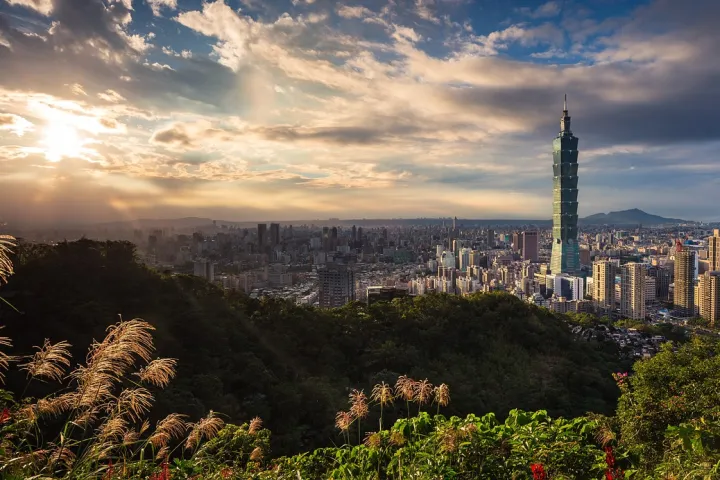
The trick is timing. Go at 4:30 PM on a weekday. The corporate crowd is still in meetings, so the queue for the elevator (NT$600, about $19 USD) is under 10 minutes. You get the full city view in daylight. Then you wait. The sun sets around 5:15 PM. In that 45-minute window, you watch Taipei transform from gray concrete into a grid of lights. The view from the 89th floor at dusk is genuinely spectacular. And you’re back on the ground by 6 PM, in time for a dinner meeting.
What most people miss
The 91st floor outdoor deck. It’s open — wind in your face, no glass between you and the city. It costs nothing extra. Most tourists don’t know it exists because the indoor floor is the main exit point. Walk up one more flight of stairs.
When to skip it
If you only have 90 minutes free between meetings, skip Taipei 101. The elevator ride alone eats 40 minutes with waiting. Pick something closer to your hotel instead.
2. Dadaocheng: The 90-Minute History Injection
Most business travelers land in Taipei and never leave the Xinyi District. Glass towers, luxury hotels, identical malls. That’s not Taiwan. That’s every financial district on earth.
Dadaocheng is 15 minutes by taxi from Taipei Main Station. It’s the old port district where Taiwan’s tea trade built the city’s first fortunes. The streets are narrow. The buildings are red-brick, five stories max. No skyscrapers. No chain stores.
What to do there
Walk Dihua Street. It’s one kilometer of dried goods, traditional medicine shops, and tea houses. Stop at Lin Hueng Tai Tea House (founded 1901). Order a pot of Dong Ding oolong (NT$250, about $8 USD). They’ll show you how to brew it properly — rinse the pot, short steeps, multiple infusions. The whole thing takes 30 minutes.
Then walk to the riverside park. From there, you can see the Guandu Bridge and the Tamsui River. The contrast between the old warehouse district and the modern skyline behind it tells you more about Taiwan’s economic history than any museum exhibit.
Practical note
Most shops close by 7 PM. Go in the morning or early afternoon. Do not go on a Monday — half the street is closed.
3. National Palace Museum: The 90-Minute Strategy
The National Palace Museum houses over 700,000 artifacts from China’s imperial dynasties. That’s overwhelming. Most visitors try to see everything, hit museum fatigue after 45 minutes, and leave remembering nothing but sore feet.
The smarter approach: pick three things. The museum’s permanent collection is arranged chronologically. Skip the first two halls entirely. Walk directly to the third floor. The three must-see items are:
- The Jadeite Cabbage (Qing Dynasty, 19th century). A single piece of jadeite carved to look like a bok choy with a locust and a katydid hiding in the leaves. It’s small — about the size of your palm. The detail is absurd. The cabbage is always surrounded by a crowd. Stand on the side, not directly in front.
- The Meat-Shaped Stone (Qing Dynasty). A piece of banded jasper that looks exactly like a slab of braised pork belly. The fat, the meat, the skin — it’s uncanny. This is the museum’s most famous piece after the cabbage.
- The Mao Gong Ding (Western Zhou, 9th century BCE). A bronze ritual cauldron with 497 characters of ancient Chinese script. It’s the longest inscription on any surviving bronze vessel. The calligraphy is a primary source for understanding Zhou dynasty governance.
These three items take 20 minutes to see. Then spend 30 minutes in the jade and ivory gallery on the same floor. Then leave. Total time: 90 minutes. You’ve seen the museum’s best pieces without the burnout.
When to skip it
If you have zero interest in Chinese history or art, skip it. The museum is excellent but specific. Don’t force yourself through it just because the guidebook says so.
4. Longshan Temple: The Living Religious Hub
Most temples in Taipei are tourist attractions first and religious spaces second. Longshan Temple is the opposite. It’s been operating continuously since 1738. On any given day, you’ll see elderly women burning incense, fortune-tellers reading bamboo sticks, and monks chanting in the main hall. The tourists are background noise.
The temple is in Wanhua District, Taipei’s oldest neighborhood. It’s a 10-minute walk from the Longshan Temple MRT station (exit 1). No entrance fee. No dress code enforcement, though covered shoulders and knees are respectful.
What to actually do
Do not just walk through taking photos. That’s the tourist move. Instead, do the following:
- Buy a bundle of incense at the shop near the entrance (NT$30, about $1 USD).
- Light it at the central brazier.
- Walk to each of the seven main altars in clockwise order. Bow three times at each altar.
- At the main hall, shake the fortune sticks (qiu qian) until one falls out. Note the number on the stick.
- Find the corresponding drawer of fortune papers. Pull the paper with that number. It will have a poem explaining your fortune.
This takes 25 minutes. You don’t need to be religious. The act of doing it gives you context for how the space actually functions.
The skeptic’s note
Longshan Temple is crowded on weekends and during festivals. Go on a Tuesday or Wednesday morning. The fortune-tellers near the side hall are mostly legitimate — they’ve been there for decades. The ones outside the main gate are selling trinkets. Ignore them.
5. Jiufen: The Half-Day Trip That Actually Works
Jiufen is the mountain town that inspired the bathhouse in Spirited Away. It’s also the most common day-trip mistake business travelers make. They assume it’s a two-hour round trip. It’s not.
From Taipei Main Station, the train to Ruifang takes 40 minutes (NT$49, about $1.50 USD). Then a bus from Ruifang to Jiufen takes 15 minutes. The total one-way time is about 1 hour 15 minutes. Add waiting time, and you’re looking at 3 hours of transit minimum.
The trick is to leave by 7 AM. The crowds arrive around 10 AM. If you’re in Jiufen by 8 AM, you have the old street almost to yourself. The shops open around 9 AM. You can walk the stone staircases, eat taro balls (NT$50, about $1.60 USD) at A-Mei Tea House, and be back in Taipei by 11:30 AM. That’s a half-day trip that fits before a 2 PM meeting.
What to skip in Jiufen
The main tourist street (Shuqi Road) is packed with identical souvenir shops selling the same keychains and pineapple cakes. Skip it. Walk the smaller alleys — Jishan Street and Qiche Road. That’s where the actual character of the town lives. The teahouses on the hillside have better views and fewer people.
When NOT to go
If it’s raining heavily, skip Jiufen. The mountain roads get slippery, the fog blocks the view, and the crowds cram into the covered alleys. It becomes an unpleasant shuffle. Pick a dry day or go to the National Palace Museum instead.
Practical Timeline: A Sample 48-Hour Schedule
| Day | Time | Activity | Duration |
|---|---|---|---|
| Day 1 | 7:00 AM – 8:15 AM | Jiufen (early arrival, empty streets) | 75 min transit + 2 hours exploring |
| Day 1 | 11:30 AM – 12:30 PM | Lunch at a local noodle shop near Taipei Main Station | 60 min |
| Day 1 | 2:00 PM – 6:00 PM | Business meetings | 4 hours |
| Day 1 | 6:00 PM – 7:00 PM | Dinner meeting at a restaurant near your hotel | 60 min |
| Day 2 | 8:00 AM – 9:30 AM | Dadaocheng walk + tea at Lin Hueng Tai | 90 min |
| Day 2 | 10:00 AM – 12:00 PM | Business meetings | 2 hours |
| Day 2 | 12:00 PM – 1:30 PM | Lunch break | 90 min |
| Day 2 | 2:00 PM – 3:30 PM | National Palace Museum (three-item strategy) | 90 min |
| Day 2 | 4:30 PM – 6:00 PM | Taipei 101 observation deck (sunset timing) | 90 min |
| Day 2 | 7:00 PM | Evening meeting or free time | Flexible |
This schedule leaves gaps for unexpected delays, jet lag, and the reality that business meetings run long. Every sight is within 30 minutes of central Taipei. No full-day commitments. No wasted transit.
Common Mistakes Business Travelers Make
Three errors I see repeatedly:
Error 1: Overplanning. You land at Taoyuan Airport, check into your hotel, and immediately try to visit four places in one evening. You end up exhausted and late for your first meeting the next day. Pick one thing per day. Maximum two if one is a quick stop.
Error 2: Trusting the hotel concierge. Hotel concierges in Taipei are trained to recommend safe, generic options — the same three restaurants and two tours every guest gets. Ask your Taiwanese colleagues instead. They know the places that don’t show up in English-language guides.
Error 3: Forgetting about the MRT. Taipei’s MRT is clean, fast, and cheap. A single ride costs NT$20-65 ($0.60-$2 USD). Taxis are convenient but get stuck in traffic during rush hour (8-9 AM and 5-7 PM). If your meeting is within 500 meters of an MRT station, take the train. It’s faster.
The Verdict
If you have one free afternoon in Taipei, go to Dadaocheng. Walk Dihua Street, drink tea at Lin Hueng Tai, and watch the river. It’s the most efficient way to understand Taiwan’s history, culture, and economy in under two hours. If you have a full free day, add the National Palace Museum in the morning and Taipei 101 at sunset. Skip Jiufen unless you can leave by 7 AM.
Taiwan rewards the prepared traveler. Show up with a plan, and you’ll see more in 48 hours than most tourists see in a week.