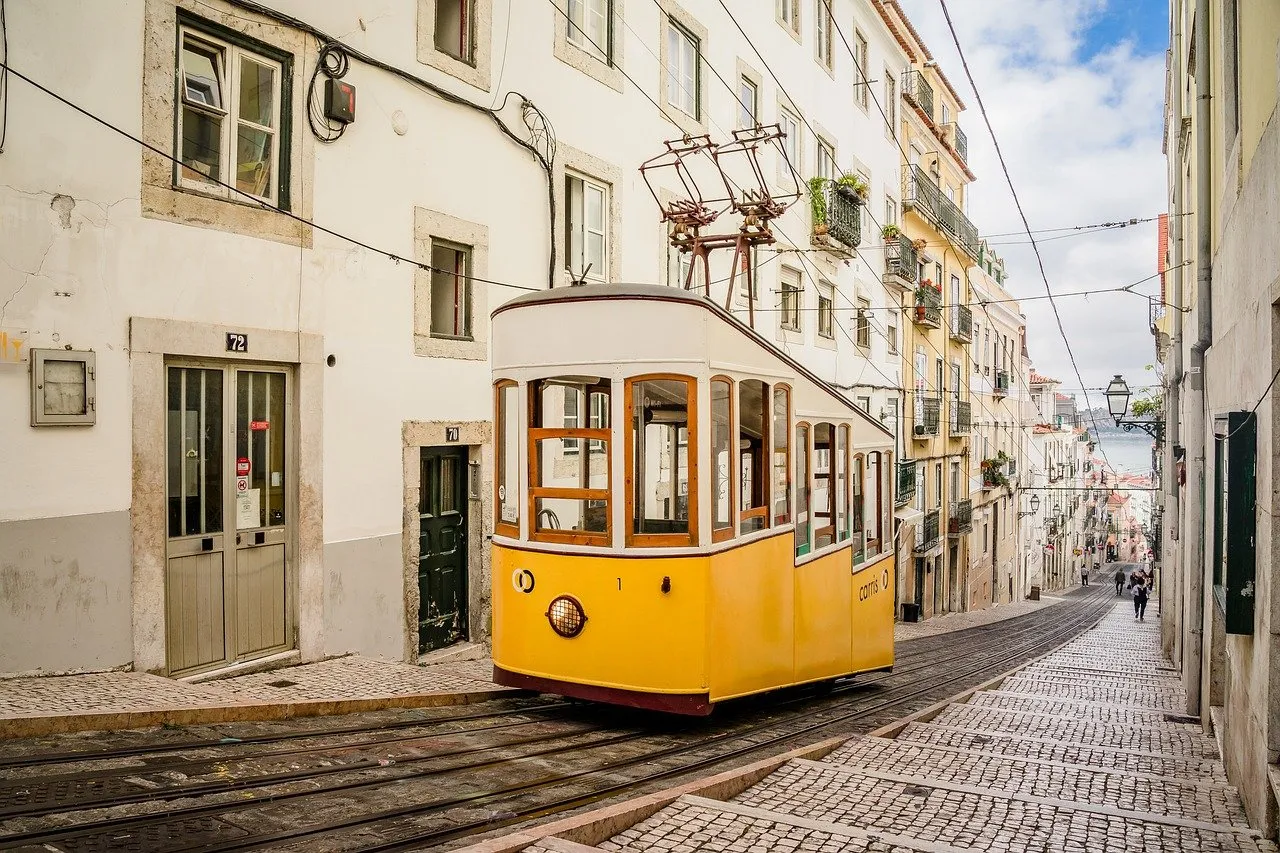
Lisbon smells like grilled sardines, old diesel engines, and the faint, lingering scent of laundry detergent wafting down from balconies in the Alfama. It is a loud, vertical, beautiful disaster of a city. If you’re looking for a polished European capital where everything works and the trains run on time, go to Munich. Lisbon isn’t for you. It’s for people who don’t mind a bit of grit under their fingernails and a constant, low-grade burn in their quadriceps.
I’ve been there four times in the last six years. I’ve seen it change from a hidden gem where you could get a full meal and a bottle of wine for twelve Euros into a place where tech bros in Patagonia vests argue about Bitcoin over five-Euro flat whites. It’s frustrating. But I keep booking the flights. I can’t help it.
The Time Out Market is a literal circle of hell
I’m going to start with a take that usually gets me yelled at by travel bloggers: the Mercado da Ribeira (Time Out Market) is a scam. Okay, maybe not a legal scam, but a spiritual one. I remember walking in there on a Tuesday in October 2021, starving and expecting a “curated culinary experience.” What I got was a deafening hall filled with three thousand tourists elbowing each other for the privilege of sitting on a wooden stool and eating a twenty-Euro burger that tasted like salt and disappointment.
The whole place feels like a food court in a high-end airport. It’s sterile. It’s loud in a way that makes conversation impossible. I spent 24.50 Euro on a small plate of octopus and a glass of warm white wine. I felt like a mark. If you want real food, walk three blocks in any direction away from the river and look for a place with paper tablecloths and a TV playing a football match with the sound turned off. That’s where the actual magic happens.
Actually, let me rephrase that—it’s not that the food at Time Out is bad. It’s just that it’s divorced from the soul of the city. It’s Lisbon for people who are afraid of not being able to read the menu. Don’t be that person. Struggle through the Portuguese. It’s worth it.
Avoid the Pink Street after 10 PM. It’s just a sticky, neon-lit corridor for bachelor parties to vomit in. You’ve been warned.
The hills will humiliate you
You think you’re in shape? Lisbon will disabuse you of that notion within forty-five minutes. The city is built on seven hills, but I’m convinced that’s a lie and there are actually forty-two. The pavement is made of calcada portuguesa—small white and black limestone cubes that have been polished to a mirror shine by millions of footsteps over centuries.
When it rains, these stones become a death trap. I’m not exaggerating. On July 14, 2021, at approximately 2:15 PM, I was walking down Rua da Rosa in Bairro Alto. It had just started a light drizzle. I took one step, my left foot decided it wanted to be in Cais do Sodre while my right foot stayed in Principe Real, and I went down. Hard. I took out a bag of groceries being carried by a very kind elderly woman. I spent the rest of the afternoon apologizing in broken Spanish because my brain forgot my three words of Portuguese under the stress of the shame.
I might be wrong about this, but I genuinely believe the city keeps these stones specifically to weed out the weak tourists. Wear sneakers. Not “cute” sneakers. Not those flat-soled Vans that have zero grip. Get something with actual tread. I tracked my movement on a Tuesday last spring and did 16,400 steps with a total elevation gain of 84 floors. My calves looked like they were carved out of granite by the end of the week.
Anyway, the point is that the hills are the price of admission for the views. The miradouros (viewpoints) are the only reason to tolerate the physical torture. Miradouro da Senhora do Monte is the best one. Don’t go to the Santa Justa Lift. You’ll wait two hours in line to pay five Euros for a ride that lasts thirty seconds. Just walk up the hill behind it for free. It’s common sense.
The Alfama is dying, but you should still go
The Alfama is the oldest district. It’s a labyrinth of narrow alleys where you can touch the walls on both sides if you stretch your arms out. It’s beautiful. It’s also becoming a hollowed-out shell. According to a report I read recently, nearly 30% of the housing units in the historic core are now short-term rentals. You’ll see the lockboxes everywhere. It’s depressing.
I used to think that staying in an Airbnb in the heart of the Alfama was the “authentic” way to do it. I was completely wrong. It just contributes to the displacement of the grandmothers who have lived there for eighty years. Now, I stay further out—Areeiro or Alvalade—and take the green line in.
But you should still walk through the Alfama. Go at 10 AM on a Wednesday when the tourists are still sleeping off their Vinho Verde. You’ll hear Fado drifting out of a window, see someone hanging their underwear to dry over a 12th-century stone arch, and for a second, you’ll understand why people have been fighting over this piece of land for two thousand years. It’s a ghost of a neighborhood, but it’s a beautiful ghost.
Let’s talk about the custard tarts (and my unpopular opinion)
Everyone tells you to go to Belém for the Pasteis de Nata. They tell you to stand in the line that snakes around the block for forty minutes. I refuse to do it. I’ve had the ones from Pasteis de Belém, and honestly? They’re fine. They’re good. But they aren’t life-changing. I’ve bought the same 1.20 Euro tart from a random bakery next to a bus stop in Benfica and it was 95% as good with 0% of the hassle.
The secret to a good Pastel de Nata isn’t the location; it’s the temperature. If it’s warm and the crust shattered like glass when you bite it, you’ve won. If it’s cold and the custard feels like rubber, you’ve lost. That’s it. That’s the whole trick.
While we’re on food, here is a short list of things that actually matter:
- Ginjinha: Go to the tiny hole-in-the-wall near Rossio square (A Ginjinha). It costs 1.50 Euro. They ask if you want it “with or without” (the cherry). Say with. Drink it standing on the sidewalk. Don’t linger.
- Bifana: It’s just a pork sandwich. That’s it. But at a place like O Trevo, it’s a religious experience. Smother it in mustard and piri-piri oil. If you don’t have grease on your chin, you’re doing it wrong.
- Coffee: Ask for a “bica.” It’s a shot of espresso. It will cost you about 0.70 to 0.90 Euro in a normal neighborhood. If you pay more than 1.50 Euro, you are in a tourist trap.
The transit is a charming disaster
The yellow Tram 28 is the star of every Lisbon postcard. It’s also a mobile petri dish for pickpockets and sweat. I haven’t stepped foot on one in three years. It’s always packed to the rafters with people holding their iPhones out the window. If you want the tram experience without the misery, take the 24 or the 18. Same vibe, half the people.
The metro is actually decent, though the red line to the airport feels like it takes a decade. I’ve tested the timing: it’s consistently 28 minutes from the airport to Baixa-Chiado, regardless of what Google Maps tells you. The machines for the Viva Viagem cards are notoriously buggy. They will reject your credit card for no reason, then accept it thirty seconds later when you try again with a slightly different facial expression. I don’t know why. Nobody knows why.
I know people will disagree with me on this, but I think Cascais is boring. There, I said it. It’s a thirty-minute train ride to a town that feels like it’s trying very hard to be the French Riviera but forgot to bring the glamour. If you want the ocean, go to Costa da Caparica. It’s rugged, the waves will actually try to kill you, and the sand goes on forever. Cascais is for people who want to look at expensive yachts they will never own. Boring.
Lisbon is a city that is currently struggling with its own success. It’s being squeezed by digital nomads, rising rents, and a tourism industry that is slowly eating the culture that made it attractive in the first place. Every time I go back, a little more of the old city has been painted over with a fresh coat of “Instagrammable” teal. It makes me sad. But then I’ll find a small tasca in a back alley where the owner recognizes me from two years ago, or I’ll see the sun setting over the Tagus river, turning the whole city into a hazy shade of gold, and I forgive it all.
I wonder how much longer that feeling can last before the city just becomes a theme park. I hope I don’t find out the answer on my next trip.
Go to Lisbon. Wear ugly shoes. Eat the cheap pork sandwich. Just please, for the love of God, stay away from the Pink Street.