Are packing cubes actually saving space, or are they just expensive bags for clothes you could fold yourself? After years of carry-ons, backpacks, checked bags and badly designed hotel drawers, I have a clear answer: packing cubes help most with control, not magic compression. The right sizes stop clothes from spreading, make a small bag easier to load and let you unpack without turning the whole room upside down. The wrong set adds bulky walls, dead space and another zipper that can fail.
What Packing Cubes Actually Save
Packing cubes exist because loose clothing behaves like water inside luggage. A shirt slides into every gap, socks disappear into corners and one pair of jeans can push everything else out of place. A cube gives soft items a fixed boundary, so you can stack them and remove one category without disturbing the rest. That is the first-principles benefit: packing cubes control shape and access. They do not reduce the physical volume of cotton, denim or shoes.
Organization creates usable space
Most travelers gain space because they stop packing random loose pockets of clothing. Put underwear and socks in a small cube, tops in a medium cube and trousers in a second medium cube. The suitcase becomes a set of predictable blocks instead of a loose pile. That makes unused gaps visible. You can then place sandals, a toiletry pouch or a jacket in those gaps instead of pretending the bag is full when it is only badly arranged. A cube also protects the clothes you are not using from the daily unpacking and repacking cycle.
Compression changes thickness, not weight
Compression cubes can flatten soft garments, but they cannot make extra luggage weight disappear. A full compression cube may create room for another shirt while pushing your bag over an airline limit. It can also make wrinkles worse when you pack linen, cotton button-downs or thick knitwear too tightly. Compression works best for underwear, T-shirts, swimwear, fleece and down layers. It works poorly for structured clothing and anything you plan to wear straight from the bag. My verdict is simple: buy cubes for separation first, then treat compression as a useful bonus.
Which Packing Cube Size Fits Your Bag?
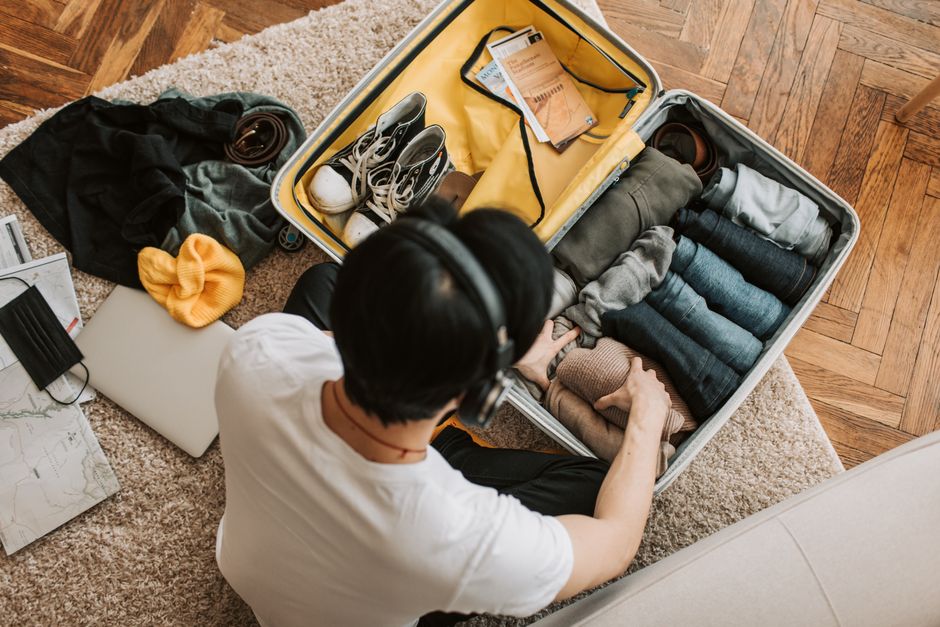
The best size is the one that matches the flat floor area of your luggage. A giant cube sounds efficient, but it often leaves awkward gaps beside the wheels and handle rails. For most carry-ons, medium cubes do the main work, while small cubes fill the narrow spaces. The table below shows the sizes I would actually buy instead of a random six-piece set.
| Product | Size or capacity | Material | 2026 US price | Best use |
|---|---|---|---|---|
| Eagle Creek Pack-It Reveal XS/S/M Set | 1 L, 3 L and 7 L | Recycled 300D polyester mesh | $59 | First carry-on set |
| Eagle Creek Pack-It Reveal Compression S/M | 3 L and 7 L; compress to 1 L and 2 L | Recycled 300D polyester mesh | $50 | Soft clothing and bulky layers |
| Peak Design Packing Cube Small | Compact personal-item size | Recycled 70D weatherproof ripstop | About $30 | Underwear, cables and small garments |
| Patagonia Black Hole Cube 6L | 6 L; 11 x 4.3 x 7 in | Recycled polyester ripstop with TPU laminate | $49 to $55 | Hard-wearing gear and duffels |
Carry-on sizing that works
For a standard carry-on, start with two medium cubes around 6 to 8 liters each and one small cube around 2 to 4 liters. That combination gives you enough structure without filling the case with empty fabric. The Eagle Creek XS/S/M set is the easiest starting point because its 1-liter cube handles small items and its 7-liter cube fits rolled shirts or light trousers. I would choose it over a large matching set for a first purchase.
Backpack sizing needs smaller blocks
Travel backpacks have curved panels and narrower openings, so large cubes waste more space than they do in a suitcase. The Peak Design Small is easier to slide into a 20- to 30-liter pack, while the Patagonia Black Hole Cube 6L works better in a duffel with a wide clamshell opening. Measure the bag interior before ordering. A cube that is only one inch too wide can turn a simple packing system into a wrestling match.
How to Pack Cubes So They Save Space
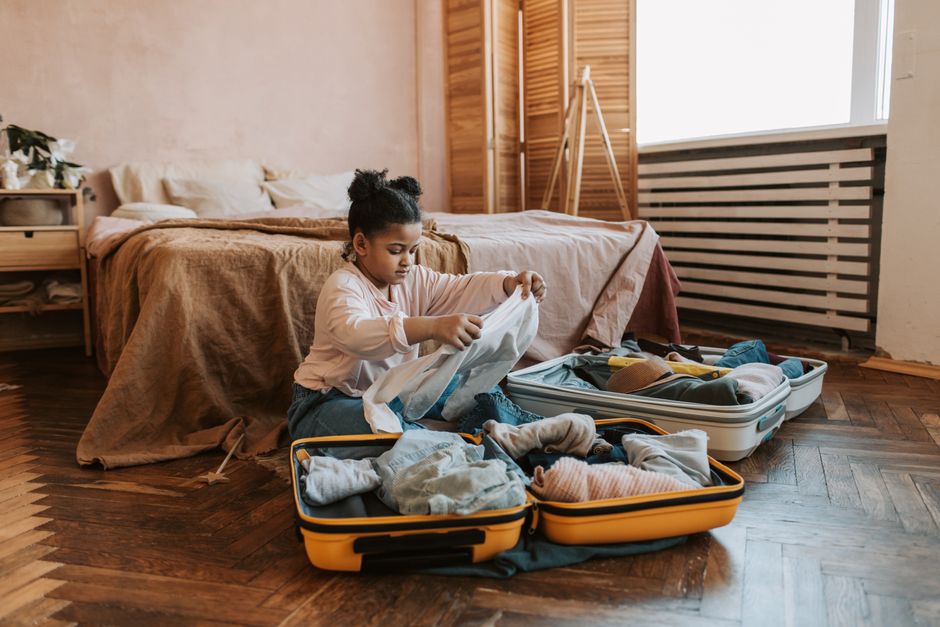
A cube only saves usable space when you load it with restraint. Stuffing every zipper until it bows defeats the shape that made the system useful in the first place. I use this short routine before every trip.
The seven-minute packing method
- Lay out every garment before opening a cube. Remove duplicates first, especially spare shoes, heavy hoodies and “just in case” outfits.
- Group clothing by job rather than by random size: daily tops, bottoms, sleepwear, underwear and weather layers.
- Fold thick items flat and roll thin knits or T-shirts. Rolling is useful for soft garments, but it does not beat folding for wrinkle-prone shirts.
- Fill each cube to about 80 percent. Leave enough room for the zipper to close without force.
- Place the heaviest cube near the suitcase wheels or close to your back in a backpack. That keeps the load more stable.
- Use narrow gaps for socks, a belt or a charging pouch instead of buying another cube to hold three loose items.
- Open the cube you will need first and place it at the top. Arrival-day clothing should not be buried under the entire trip.
The mistake that ruins the system
Do not pack by garment type if that makes dressing harder. A cube labeled “tops” may be tidy, but a seven-day trip can work better with one cube for the first half of the trip and one for the second half. The best setup reduces handling. If you must unpack every cube to find one clean shirt, the system has failed even if the suitcase looks neat.
Where the Money Should Go
Spend your money on one reliable medium cube and a useful small cube before buying a full matching set. In my experience, cheap sets fail first at the zipper, and oversized sets fail because their dimensions do not match the bag. You rarely need six cubes on your first trip. You need two sizes that fit the luggage you already own.
Best value for a first-time buyer
The Eagle Creek Pack-It Reveal XS/S/M Set at $59 is the clearest value for most travelers because it includes three useful sizes, gives you a mesh view of the contents and keeps the weight reasonable. The 7-liter M cube is large enough for shirts and light trousers, the 3-liter S cube handles smaller garments and the 1-liter XS cube stops socks and underwear from vanishing. It is not the toughest option, but it is the set I would buy for a normal carry-on.
Generic low-cost sets can be fine when you travel once or want color-coded organizers for children. Check the zipper path, seam stitching and actual dimensions before buying. A low price is not a bargain if the cube is too tall for your suitcase or the zipper catches every time you close it.
Best upgrade for frequent travelers
The Peak Design Packing Cube is worth the higher price when you travel often and care about fast access. Its tear-away UltraZip opening, clean-dirty divider and expansion-compression zipper make it more useful than a basic rectangle. For outdoor bags, the Patagonia Black Hole Cube 6L is the better verdict because its weather-resistant laminate, 190-gram weight and 6-liter capacity suit rougher conditions. I would choose Peak Design for frequent airport travel and Patagonia for hard use, not because either one magically creates more luggage space.
Do You Need Packing Cubes at All?

Packing cubes are helpful, but they are not a required travel accessory. A simple laundry bag, two zippered pouches and a disciplined packing list can solve the same problem for a short trip. The key question is not how tidy the suitcase looks; it is whether the organizer saves time and protects the way you travel.
When should you skip packing cubes?
Skip them for a one-night trip with a small personal item, for formal clothing that needs to hang or for a bag with excellent built-in compartments. They can also be a poor choice when every gram matters, because several cubes may add 300 to 600 grams before you pack anything. Ultralight travelers often get better results from one thin pouch for underwear and loose packing for the rest.
Are compression cubes better than regular cubes?
Compression cubes are better only when the problem is clothing thickness. They help with fleece, down jackets, swimwear and soft layers, but they do not create extra weight capacity and they can encourage overpacking. A regular cube is easier to load, lighter and less likely to wrinkle delicate clothes. For most people, one compression cube is enough; buying a whole compression system is usually unnecessary.
What is the final buying rule?
Match the cube to the bag, keep the fabric light, reserve compression for soft clothing and buy fewer pieces than the set recommends. The most important takeaway is this: the best packing cube is a light, correctly sized organizer that stops your clothes from spreading without tempting you to pack more.