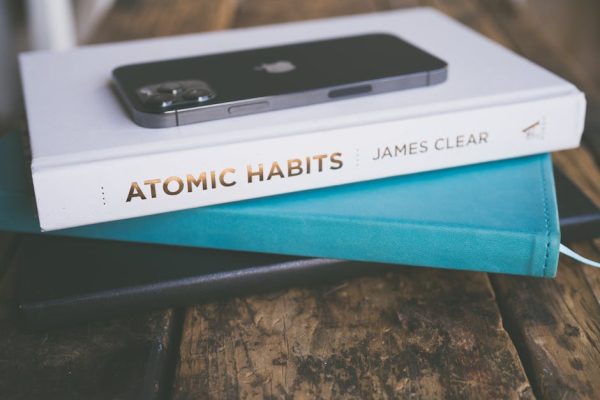
I woke up at 5:00 AM on October 14th, 2022, and I felt like I was dying. Not the dramatic, ‘call an ambulance’ kind of dying, but the slow, crushing realization that my brain had been replaced by wet cement. I had just finished reading The 5 AM Club by Robin Sharma, and I was convinced that if I didn’t see the sunrise while drinking lukewarm lemon water, I was destined to be a failure forever. I lasted exactly 19 days. By day 20, I found myself sitting on the kitchen floor at 5:15 AM, staring at a toaster, crying because I couldn’t remember how to make coffee. That’s when I realized the whole ‘rise and grind’ thing is a total lie.
The morning routine cult is actually making you dumber
We’ve been sold this idea that discipline has a specific timestamp. If you aren’t at your desk while the rest of the world is sleeping, you aren’t ‘hungry’ enough. It’s nonsense. I spent three weeks tracking my ‘Focus Score’—a simple 1-to-10 scale of how much I actually got done—and the results were embarrassing. At 5:30 AM, my average score was a 2.4. I was awake, sure. I was ‘hustling.’ But I was basically just a very expensive, very tired paperweight. Meanwhile, my focus at 9:30 PM was a consistent 8.1.
I know people will disagree with me here. There’s this weird moral superiority attached to waking up early. If you tell someone you wake up at 5 AM, they look at you like you’re a saint. If you tell them you wake up at 9 AM but work until 2 AM, they think you’re a lazy degenerate. It’s a double standard that ignores how our bodies actually function. What I mean is—actually, let me put it differently. We aren’t lazy; we’re just misaligned. Trying to force a ‘Wolf’ chronotype into a 5 AM routine is like trying to install MacOS on a toaster. It’s just not built for it.
The 5 AM routine isn’t a productivity hack; for most of us, it’s just performative exhaustion.
The actual science of chronotypes (The part the gurus ignore)

Here is the thing: your internal clock is governed by the Suprachiasmatic Nucleus (SCN) in your brain. It’s not something you can just ‘will’ into changing because you bought a fancy planner. Scientists generally categorize us into four ‘chronotypes,’ popularized by Dr. Michael Breus.
- Lions: The 5 AM people. They are real, but they only make up about 15% of the population.
- Bears: Most people. They follow the sun. They’re fine with a 7 AM or 8 AM wake-up.
- Wolves: The night owls. We don’t even start functioning until 11 AM.
- Dolphins: The insomniacs. They have a hard time with any routine.
If you are a Wolf and you’re forcing yourself to be a Lion, you are living in a permanent state of ‘social jetlag.’ I tested this. I bought an Oura ring—which I actually hate, by the way, because it’s a $300 nagging machine that tells me I’m tired when I already know I’m tired—and tracked my REM sleep. When I forced the 5 AM wake-up, my REM sleep dropped by 40%. I was literally shaving off the part of sleep that handles emotional processing and creativity just so I could tweet about being awake. It’s stupid. I’ll say it: I think the 5 AM Club is basically a cult for people who are bored with their lives and want to feel better than their neighbors.
Why I stopped listening to productivity ‘experts’
I used to think that if I just bought the right gear, I’d be productive. I spent $18 on a digital habit tracker app I used exactly twice. I bought a specific brand of $45 blue-light blocking glasses because some influencer told me they’d fix my life. They didn’t. They just made me look like a budget version of a tech bro.
Anyway, I digress. The point is that these ‘experts’ like Robin Sharma or Hal Elrod are selling a one-size-fits-all solution to a highly individual biological problem. I might be wrong about this, but I suspect most of these people don’t actually have 9-to-5 jobs or kids who wake them up at 3 AM. It’s easy to have a ‘miracle morning’ when your only responsibility is being a professional morning person. For the rest of us, forcing a 5 AM start just means we’re grumpy by lunch and useless by 3 PM. I’ve seen it at my job. We had a guy who started coming in at 6 AM to ‘get ahead.’ By 2 PM, he was staring blankly at his monitor, making mistakes on simple spreadsheets that took the rest of us two hours to fix the next morning.
Total waste of time.
The 22-day experiment that changed my mind
I decided to stop fighting my body. For 22 days, I didn’t set an alarm. I just woke up when my body felt like it (usually around 8:15 AM) and I worked when I felt ‘the buzz.’ Here is what happened:
- My coffee consumption dropped from 4 cups a day to 1.
- I stopped getting that 2 PM ‘crash’ where I wanted to faceplant into my keyboard.
- I actually finished a side project I’d been stalling on for six months.
- I stopped being a jerk to my partner in the mornings.
|
I tracked my output in words written per hour. On the 5 AM schedule, I was hitting about 400 words an hour. On my ‘natural’ schedule, I was hitting 1,100. The math doesn’t lie. You can have more hours, or you can have better hours. You rarely get both.
I’ve also developed a deep, perhaps irrational, hatred for the ‘Rise and Grind’ aesthetic on Instagram. You know the ones—a photo of a black coffee next to a notebook at 4:45 AM with a caption about ‘discipline.’ It’s fake. Half the time, those people take the photo and go back to sleep. Or they’re so sleep-deprived they aren’t actually producing anything of value. I’d rather work for four hours with a sharp brain than twelve hours with a foggy one.
Finding your own ‘Peak’
Your internal clock isn’t a suggestion; it’s the rhythm section of your life’s band. If the drummer is playing a different song than the guitarist, the music is going to suck.
Instead of forcing a time, try tracking your energy. For one week, just write down how you feel every hour on a scale of 1-10. Don’t judge it. Just watch. You’ll probably find that you have a 3-hour window where you’re a genius and 5 hours where you’re a drone. The trick isn’t to wake up earlier; it’s to protect those 3 hours like your life depends on it. For me, that’s 10 PM to 1 AM. For you, it might be 10 AM to 1 PM.
I don’t know if I’ll ever be the kind of person who ‘has it all figured out.’ I still struggle with procrastination and I still spend too much money on pens I don’t need. But I’m done with the 5 AM nonsense. I’m writing this at 11:45 PM, I have a glass of water, the house is quiet, and my brain is actually awake.
Why would I trade this for a cold floor and a headache at 5 AM?