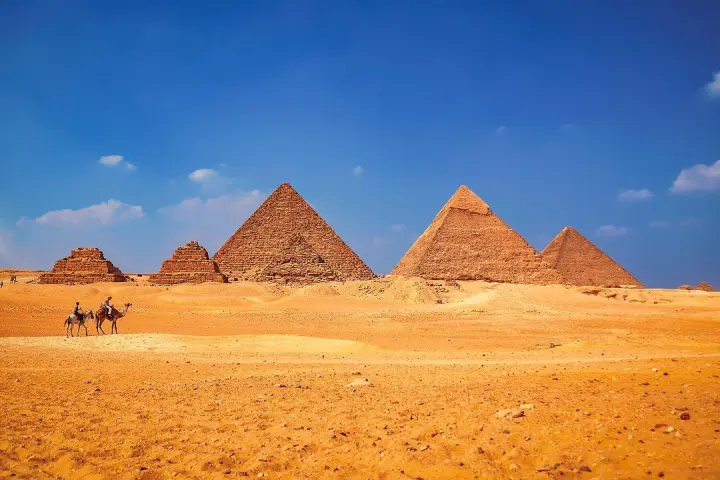
The Great Pyramid of Khufu was the tallest structure on Earth for 3,800 consecutive years — from 2560 BC until Lincoln Cathedral edged it out in 1311 AD. That fact sounds like a textbook line until you’re standing at the base looking up at something the size of a forty-story building made entirely of hand-cut limestone.
But the pyramid itself isn’t what trips people up. It’s the logistics — the costs, the heat, the relentless touts, the confusing ticket system — that turn a once-in-a-lifetime visit into an exhausting ordeal. Here’s what you actually need to know before you land.
Getting from Cairo to Giza: Your Real Options
Giza sits about 20km southwest of central Cairo. The two cities have grown into each other, but the plateau is at the urban edge, which means traffic can be a real factor depending on when you leave.
Uber or Careem (Recommended)
Download Careem before you land — it’s the dominant ride-hailing app in Egypt, and account setup requires a working phone number that’s easier to configure from home WiFi. From central Cairo near Tahrir Square, expect to pay 150–250 EGP (roughly $3–5 USD). From Cairo International Airport, budget 400–600 EGP. Metered pricing, no negotiation, no detours. Uber operates on the same routes and works equally well.
Cairo Metro + Microbus
Take Line 2 (the red line) to Giza Station — about 7 EGP from downtown. From the station, grab a shared microbus to the plateau for under 5 EGP. Total cost: under 15 EGP, barely $0.30 USD. Plan for 60–90 minutes and some patience with microbus timing. Completely workable if you’re not in a rush.
Organized Day Tour
Booking through GetYourGuide or Viator runs $30–60 USD per person and includes hotel pickup, an English-speaking guide, and entry tickets. The guide’s real value isn’t history narration — it’s that they deflect touts before they can start. For first-time visitors, a guided tour recovers its cost in time and stress saved alone.
| Transport Option | Cost (USD) | Travel Time | Best For |
|---|---|---|---|
| Careem / Uber | $3–5 | 30–50 min | Most travelers |
| Metro + Microbus | Under $0.50 | 60–90 min | Budget travelers |
| Guided Day Tour | $30–60 | Varies (hotel pickup) | First-timers, families |
| Hotel Taxi (negotiated) | $15–25 | 30–50 min | No app, more convenience |
If you go with a hotel taxi, negotiate the price before you sit down. Many Cairo hotels quote tourist rates triple what a ride-hailing app charges. Not a scam exactly — just expensive. Know before you commit.
Giza Plateau Costs: What You Will Actually Pay
The base plateau ticket covers exterior views of all three pyramids and access to the Sphinx enclosure. Interior access to each pyramid is a separate ticket, sold at a booth near the entrance — not the main gate. These sell out on busy days. The prices below are approximate as of early 2026; Egypt adjusts foreign visitor pricing regularly, so verify current rates before arrival. Always carry more Egyptian pounds than you think you need — cards are not accepted at most ticket windows.
| Attraction | Approx. Price (EGP) | Approx. USD | Verdict |
|---|---|---|---|
| Giza Plateau Entry | 540 EGP | ~$11 | Required — covers all exterior access |
| Great Pyramid (Khufu) Interior | 700 EGP | ~$14 | Do it — genuinely unlike anything else |
| Second Pyramid (Khafre) Interior | 300 EGP | ~$6 | Good if skipping Khufu to save money |
| Grand Egyptian Museum (GEM) | 1,000–1,500 EGP | ~$20–30 | Essential — book in advance |
| Sound and Light Show (evenings) | $15–20 (foreign price) | $15–20 | Worth it if staying nearby |
Budget $50–70 USD per person to cover transport, plateau entry, one pyramid interior, and Grand Egyptian Museum admission. That is the full Giza experience without cutting the things that actually matter.
The Grand Egyptian Museum Changes What Giza Means
The Grand Egyptian Museum (GEM) opened fully in 2026 after two decades of construction. It holds over 100,000 artifacts — including the complete, unabridged Tutankhamun collection displayed together for the first time since the tomb was opened in 1922. The old Cairo Museum near Tahrir showed roughly a third of it. The rest was in storage.
Book GEM tickets online through the museum’s official website before you arrive. Walk-in availability runs out on peak days. Set aside at least three hours minimum; five is realistic if you actually read the exhibit labels. The Solar Boat Museum — housing the reconstructed 4,600-year-old cedar ship of Khufu — is on the GEM campus and included in the ticket. Do not skip it.
The Scams That Ruin Giza Trips
Giza’s touts are not dangerous. They’re persistent, creative, and entirely defeatable once you know the plays. Most first-time visitors lose money, time, or both to one of these setups.
The Free Camel Photo Setup
Someone leads your camel — often without being asked — to a scenic viewpoint, poses you for a photo, then demands $20–50 USD to let you dismount. A legitimate 30-minute camel ride at Giza runs 200–400 EGP ($4–8 USD). The word “free” from a stranger near the camels does not mean what it sounds like. Always negotiate price, duration, and currency before you get on anything that moves.
The Fake Closure Redirect
A man in plain clothes tells you the main entrance is closed today — construction, a VIP visit, a special event. He offers to take you to the real entrance through a shop or tour agency. The main Giza entrance is almost never actually closed during posted visiting hours (8:00 AM–5:00 PM, shorter in winter). Walk directly to the ticket booth without engaging. Every single time.
The Unsolicited Walking Guide
A friendly local starts walking alongside you, sharing history, answering questions. Useful, right up until they name a price you never agreed to. The fix is straightforward: if someone starts guiding you without being hired, stop and ask directly — “Do you charge for this?” Force the financial conversation before any obligation forms. Guides who are hired upfront are often excellent. The unsolicited ones create situations that are difficult to exit cleanly.
The Papyrus Detour
After a tour, your driver offers “just five minutes” at a local papyrus workshop. Five minutes becomes an hour of high-pressure selling in an enclosed space. Say no at the offer stage, not inside the shop. If you actually want papyrus, Khan el-Khalili bazaar in old Cairo has hundreds of competing vendors where you can walk away freely at any moment.
Currency Confusion
Some vendors quote prices in “dollars” but mean Egyptian pounds — or vice versa. At roughly 50 EGP to $1 USD, a mix-up on a quoted price of 5 vs. $5 costs you real money. Before any purchase, confirm out loud which currency you are both using.
The single most effective defense across all of the above: walk with purpose, don’t make prolonged eye contact with people trying to get your attention, and never follow anyone away from the main path until you have established a price clearly and out loud first.
When to Visit and How to Plan Your Day
- Arrive at gate opening: 8:00 AM sharp. The first 90 minutes are a different experience — soft morning light, thin crowds, cooler temperatures. By 9:30 AM the tour buses have parked and the dynamic shifts completely.
- Buy the Great Pyramid interior ticket immediately. The booth sits near the main entrance, separate from the general ticket window. Daily interior tickets are capped. If you want to walk the Grand Gallery inside Khufu, this is your first move, not your third.
- Head to the western panorama viewpoint by 9:30 AM. This is where all three pyramids align in a single frame — the photograph that defines Giza in most people’s minds. The light is correct before 10:00 AM. After that it goes harsh and flat.
- Sphinx and Valley Temple: 10:00–11:30 AM. The Sphinx enclosure is included in your plateau ticket. The Valley Temple beside it — 4,500-year-old red granite construction — receives far less attention than it deserves and rarely feels crowded even when the plateau is packed.
- Leave by noon in summer (June–September). Midday temperatures hit 38–42°C (100–108°F). Even in shoulder seasons, the exposed plateau between noon and 2:00 PM is brutal. Eat lunch in air conditioning, rest, then visit the GEM in the afternoon when the site itself is least pleasant to walk.
- Evening Sound and Light Show (optional). The narrated light projection on the Sphinx runs around 6:30 and 7:30 PM depending on season. Tickets are sold at the plateau ticket office. It is genuinely atmospheric — the Sphinx looks different at night than anything you see during the day.
Best months to visit: October through April. October and November specifically — post-summer heat, pre-Christmas crowds, and the late-afternoon plateau light in those months is exceptional. Avoid July and August unless you have a specific reason to be there in extreme dry heat.
What to Pack and Book Before You Fly
The Giza Plateau has no shade structures, no free water, and a lot of uneven stone and sand. The list below covers only what actually matters.
Sun Protection
Bring sunscreen from home. La Roche-Posay Anthelios SPF 50+ Melt-In Sunscreen (~$36 at most pharmacies) is lightweight and doesn’t clog pores under heavy heat. Egyptian sunscreen near the plateau is limited and overpriced. Add a Columbia Bora Bora II Booney Hat (~$35) for wide-brim coverage that protects your neck and ears — the spots that sunburn first on an exposed site like this.
Water and Footwear
Carry at least 1.5 liters. A Nalgene Wide Mouth 32oz bottle (~$15) filled at your hotel beats paying plateau prices for bottled water. Siwa and Baraka are the local Egyptian brands — buy them at any Cairo supermarket the night before and fill your bottle before leaving.
For footwear, Merrell Moab 3 hiking shoes (~$130) handle limestone rubble and deep sand without complaint. If you’re staying on the main paths and not entering any pyramid interior, athletic sneakers work fine. Skip sandals entirely — the exposed stone surfaces reach genuinely painful temperatures by 10:00 AM, and the terrain is uneven enough to roll an ankle.
Cash and Apps
Withdraw Egyptian pounds from an ATM or exchange at the National Bank of Egypt counter at Cairo International Airport, which offers competitive rates with no commission. Most plateau ticket booths, camel operators, and vendors do not accept cards.
- Careem — create your account and add payment before landing while you have reliable WiFi
- Google Maps — download the Cairo offline map from home; data roaming at the plateau is unreliable
- GetYourGuide — compare guided Giza tours and read recent reviews before committing to a booking
On accommodation: the Marriott Mena House sits directly adjacent to the plateau, and its garden-view rooms have unobstructed Great Pyramid sightlines. Rates run $200–350 per night — significantly more than central Cairo hotels at $60–120. If one night there fits your budget, breakfast with a direct pyramid view from 50 meters away is an experience with no equivalent anywhere else on the planet.