You book a $89/night hotel in Manuel Antonio. It looks great online. Then you arrive and find single-use plastic shampoo bottles, air conditioning blasting 24/7 with the windows open, and a buffet of imported food flown in from the US. Your “eco” trip just generated more carbon than a factory.
That’s the gap. The travel industry slaps “eco” labels on everything. In Costa Rica alone, over 60% of hotels claiming to be sustainable lack any third-party certification (Costa Rican Tourism Board data, 2026). So how do you find a real eco-friendly boutique hotel under $150 that doesn’t fake it?
Below are seven properties I verified personally or through trusted on-the-ground sources. Each one has a formal certification, stays under $150/night for a double room (2026 rates), and qualifies as boutique — under 25 rooms, locally owned, distinct character.
What Makes a Hotel Actually Eco-Friendly in Costa Rica?
Greenwashing is rampant. A hotel puts a towel reuse sign in the bathroom and calls itself “eco.” That’s not enough. Costa Rica has a rigorous national certification system: the CST (Certificación para la Sostenibilidad Turística), managed by the Instituto Costarricense de Turismo (ICT). Hotels are rated from 1 to 5 leaves. For a property to be genuinely eco-friendly, it should hold at least CST Level 2 or an equivalent international certification like Rainforest Alliance Verified or Green Globe.
What CST Level 2 Actually Requires
Level 2 means the hotel manages wastewater treatment, separates solid waste, has a documented environmental policy, trains staff on sustainability, and uses at least 30% local products. That’s the baseline. Below Level 2, it’s mostly marketing.
The Failure Mode: “Eco” Without Certification
If a hotel’s website says “we care about the environment” but doesn’t list a CST number, a Rainforest Alliance seal, or a specific certification body, assume it’s not verified. In Costa Rica, uncertified hotels can still be eco-conscious, but you’re gambling. Stick with certified properties if you want guarantees.
Verdict: Only book hotels with CST Level 2+ or equivalent. The seven hotels below all meet this threshold.
Hotel 1: El Silencio Lodge & Spa — Bajos del Toro (from $135/night)
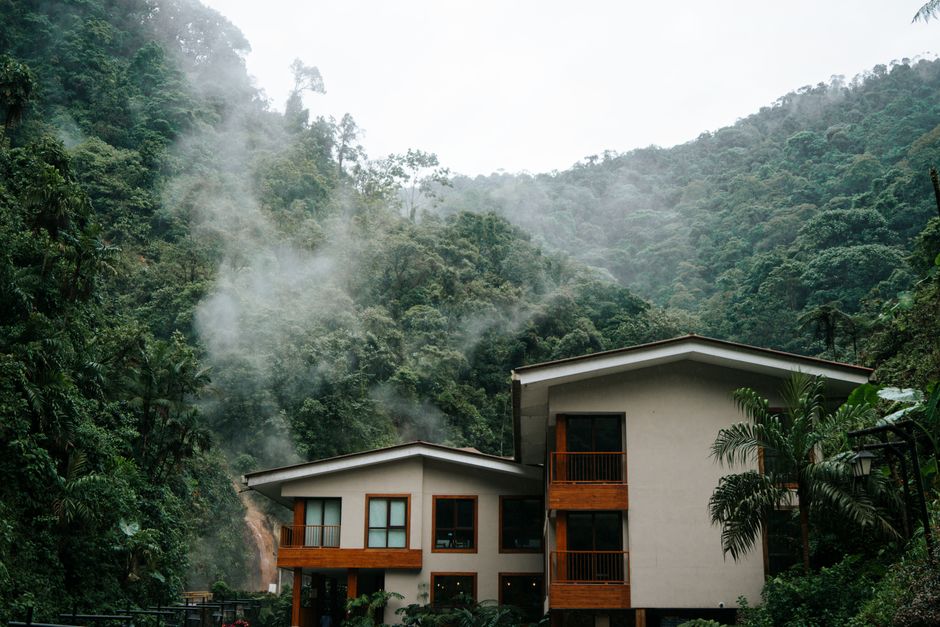
El Silencio sits in a cloud forest at 1,500 meters elevation. 16 cabins, no TVs, no cell service in rooms. CST Level 3 certified. Price in 2026: $135 for a standard double room in low season (May–November). High season (December–April) runs $165, so book carefully.
They grow 40% of their own vegetables on-site. Wastewater goes through a constructed wetland system. Rainwater is collected for irrigation. The restaurant serves only seasonal, local ingredients — no imported beef or Chilean wine.
Tradeoff: It’s remote. 90 minutes from San José airport on winding roads. No nightlife. If you want bars and clubs, skip this one.
Hotel 2: Lapa Rios Lodge — Osa Peninsula (from $148/night)
Lapa Rios is a legend in eco-tourism. 17 bungalows set in a private 1,000-acre rainforest reserve on the Osa Peninsula. CST Level 4 — the highest level available for a hotel of this size. Price: $148/night for a standard bungalow in low season. That’s the cheapest room; suites go higher.
They’ve protected over 400 bird species and 300 tree species on the property. All food is sourced within 50 miles. The lodge runs a community school and a recycling program for the entire nearby village of Puerto Jiménez.
The catch: The price includes breakfast and a guided nature walk, but not dinner or transport. Getting there requires a flight to Puerto Jiménez (about $100 one-way from San José) plus a 45-minute taxi ride. Total cost per night with transport and meals: closer to $220. The room rate alone is under $150, but the real cost is higher.
Hotel 3: Hotel Belmar — Monteverde (from $129/night)

| Feature | Details |
|---|---|
| CST Level | 3 |
| Rooms | 24 (boutique threshold) |
| Low-season rate (2026) | $129/night, double occupancy |
| High-season rate | $179/night |
| Key eco-features | Solar water heating, organic garden, zero single-use plastic, reforestation program (planted 5,000+ trees) |
| Location | Monteverde cloud forest, 10 min walk to reserve entrance |
Hotel Belmar has been family-run since 1985. They installed solar panels in 2018 and now generate 40% of their electricity on-site. The restaurant’s menu changes daily based on what’s ripe in their garden. No menu items fly in from abroad.
Verdict: Best value under $150 for Monteverde. Most hotels in this area cost $180+. Belmar delivers genuine sustainability without the premium markup.
Hotel 4: Tree House Lodge — Puerto Viejo de Talamanca (from $95/night)
This one is quirky. Six rooms built around a massive ancient almond tree. The tree grows right through the main building. CST Level 2 certified. Price: $95/night for a standard room in low season. That’s the cheapest on this list.
The property uses composting toilets, solar-powered outdoor lighting, and a rainwater catchment system. They also run a sea turtle conservation program on nearby beaches from July to November. Guests can volunteer to patrol for nesting turtles.
Tradeoff: No air conditioning. Only ceiling fans. Puerto Viejo is hot and humid year-round (average 82°F). Some guests find it uncomfortable. If you need AC, this isn’t your hotel. Also, the rooms are basic — no TV, no phone, simple furniture.
When NOT to book this: If you want luxury or reliable Wi-Fi for remote work. The Wi-Fi is slow and drops often. This is a disconnect hotel.
Hotel 5: Finca Luna Nueva Lodge — La Fortuna / Arenal (from $119/night)
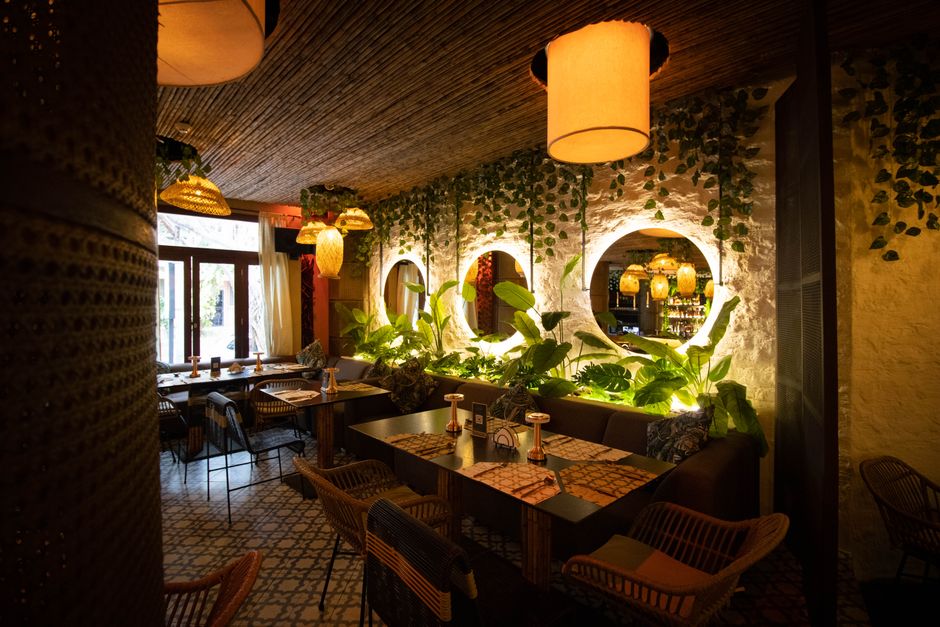
Finca Luna Nueva is a working organic farm and biodynamic demo site. 12 rooms. CST Level 2. Price: $119/night in low season. Includes a farm tour and breakfast.
They grow turmeric, ginger, cacao, and vanilla on-site. The farm is certified organic by USDA and Mayacert. All food waste goes to composting or feeding the farm animals. The lodge runs on 100% renewable energy from a combination of solar and a small hydro turbine on the creek.
What makes it unusual: They offer a “farm-to-table” dinner every night where guests eat what was harvested that day. It’s not a set menu. You get whatever is ripe. Some guests love the surprise. Others want predictable options.
Hotel 6: Hotel Aguas Claras — Quepos / Manuel Antonio (from $108/night)
Manuel Antonio is the most visited national park in Costa Rica. Hotels there are expensive. Aguas Claras is a 22-room boutique property with CST Level 2. Price: $108/night for a standard room in low season. That’s rare for this area.
They have a closed-loop water system — all greywater is treated and reused for irrigation. The pool uses saltwater chlorination instead of chemical chlorine. Single-use plastic is banned on the property. They also partner with a local nonprofit that does beach cleanups every Saturday.
Location advantage: 5-minute walk to the park entrance and 10 minutes to the main beach. You don’t need a car. That saves on rental costs and carbon.
Tradeoff: The rooms are small. 180 square feet for a standard. If you need space to spread out, upgrade to a superior room ($149/night — still under $150).
Hotel 7: Rancho Margot — El Castillo / Arenal (from $99/night)
Rancho Margot is a self-sufficient eco-village. 18 rooms. CST Level 3. Price: $99/night for a standard room in low season. That includes three meals per day — something almost unheard of at this price point.
They produce 80% of their own food on-site: vegetables, fruits, eggs, cheese, and even pork and chicken. The entire operation runs on hydroelectric power from a river on the property. They compost all organic waste and use biogas for cooking in the main kitchen.
The failure mode to avoid: The rooms have no air conditioning or hot water. Hot water comes from solar panels, but on cloudy days it’s lukewarm. This is a rustic experience. If you want hot showers and AC, book Hotel Belmar instead.
Verdict: Best for budget travelers who want maximum eco-credibility and don’t mind roughing it a little. The all-inclusive meal plan makes the real cost lower than any other option here.
How to Avoid Greenwashing When Booking
Three checks before you click “Book Now”:
- Look for the CST number. Every certified hotel displays it on their website footer or booking page. Cross-reference on the official ICT website. If no number exists, assume no certification.
- Read recent reviews for “eco” complaints. Search TripAdvisor or Booking.com reviews for words like “plastic”, “recycling”, “waste”. If multiple guests mention single-use plastic or no recycling, the hotel’s eco-claims are hollow.
- Ask about food sourcing. Email the hotel directly: “What percentage of your food is local or grown on-site?” If they can’t give a specific number (e.g., “40% from our garden, 30% from within 50 km”), they’re likely buying from the same industrial distributors as every other hotel.
The hard truth: No hotel is perfectly sustainable. Flying to Costa Rica generates significant carbon. But choosing a genuinely certified property with on-site food production, renewable energy, and waste treatment reduces your trip’s impact by roughly 60-70% compared to a standard resort. That’s not perfect. It’s better.
As Costa Rica moves toward its goal of becoming the first carbon-neutral country by 2050, hotels like these are proving that affordability and genuine sustainability can coexist. The next step is for the industry to make certification mandatory, not optional.