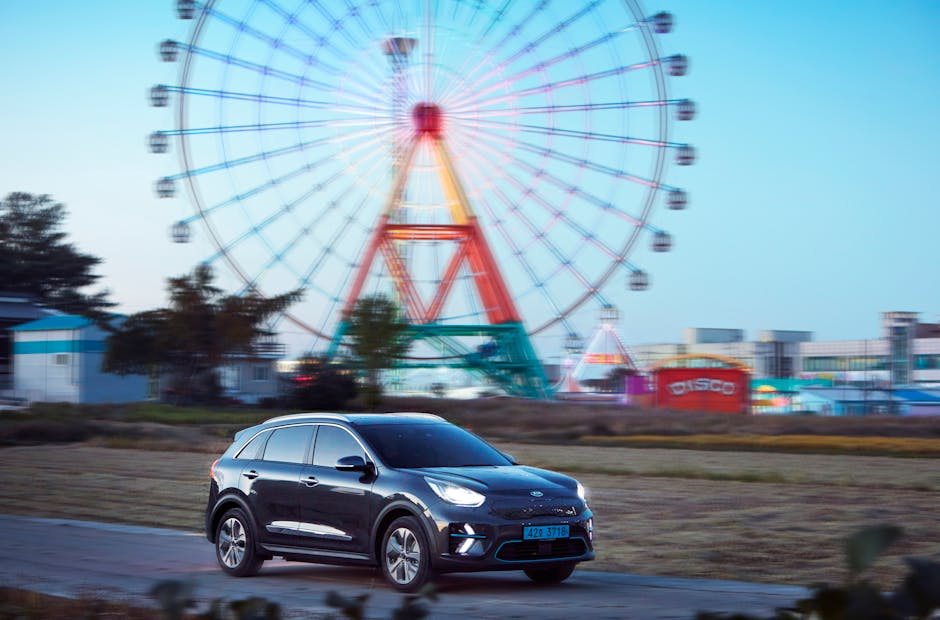
I drove an electric car from Los Angeles to Denver in July. Not a Tesla. A Hyundai Ioniq 5. The trip took 18 hours in a gas car. It took me 26. That extra 8 hours wasn’t wasted — it was spent learning exactly what works and what doesn’t when you plan an EV road trip. Here’s the real playbook.
Why Gas Station Thinking Will Strand You
The biggest mistake new EV owners make is treating charging like filling a gas tank. You don’t. A gas stop is 5 minutes. A fast-charging stop is 25-45 minutes. That difference changes everything about how you plan a route.
Gas station logic says: drive until empty, then find the nearest station. EV logic says: plan your stops before you leave, and treat each stop as a 30-minute break you actually want to take.
Here’s a hard truth most YouTube reviewers won’t tell you: charging speed drops dramatically after 80%. The Hyundai Ioniq 5 can charge from 10% to 80% in 18 minutes on a 350kW charger. From 80% to 100%? Another 30 minutes. That’s not worth your time on a road trip.
The 80% Rule
Plan your route so you arrive at charging stations with 10-20% battery remaining. Charge to 80% and leave. The last 20% takes as long as the first 70%. You don’t need a full battery — you need enough to reach the next charger with a 10% buffer.
Real-World Range vs EPA Numbers
The Ford Mustang Mach-E claims 300 miles of range. At 75mph on a highway with the AC running? More like 230 miles. In winter with heat on? 190. Use 70% of the EPA range as your planning number. You’ll arrive with a comfortable buffer instead of sweating through the last 20 miles.
Route Planning Apps: The Only Three You Need

There are dozens of EV route planning apps. Most are terrible. These three actually work, and each serves a different purpose.
| App | Best For | Cost | Key Feature |
|---|---|---|---|
| A Better Routeplanner | Detailed route planning before you leave | Free (premium $4.99/month) | Customizable buffer, weather adjustment, elevation changes |
| PlugShare | Checking if chargers actually work | Free | User reports on broken chargers, real-time status |
| ChargePoint | Network-specific navigation | Free | Pays for itself with member pricing at ChargePoint stations |
A Better Routeplanner Is Non-Negotiable
This is the only app that factors in elevation, temperature, wind, and your specific driving speed. I plugged in a trip from Phoenix to Flagstaff once. Flat-ground apps said one charging stop. A Better Routeplanner said three, because it knew I was climbing 5,000 feet. It was right.
Set your departure state of charge to 90% (never 100% unless you’re leaving immediately — battery degradation is real). Set your arrival buffer to 10%. Tell it you drive 5mph over the speed limit. The route it gives you is the route you should take.
PlugShare Saves You From Dead Chargers
Nothing ruins a trip like pulling into a station with 8% battery and finding all four chargers broken. PlugShare’s user reports are brutally honest. “Charger 2 won’t connect. Charger 3 works but only at 50kW. Avoid this location after 8pm.” Read the last 5 check-ins before you commit to a stop.
Charging Networks: Which Ones Actually Work
Not all charging networks are equal. Some are reliable. Some are a gamble. Here’s the honest breakdown.
Tesla Supercharger is the gold standard. 99% uptime. Plug and charge works every time. The V3 Superchargers deliver 250kW consistently. If you drive a Tesla, your road trip planning is easy. The Supercharger network covers major highways in the US and Europe.
Electrify America is the best non-Tesla option. 350kW chargers that actually hit 350kW (on compatible cars like the Kia EV6 or Hyundai Ioniq 5). Uptime is around 85-90%. Some stations have broken stalls. Always have a backup plan within 20 miles.
ChargePoint is everywhere but mostly Level 2 (slow). Their DC fast chargers are reliable but rarely exceed 125kW. Good for overnight charging at hotels. Bad for quick highway stops.
EVgo is decent in cities, unreliable on highways. Many of their older 50kW chargers take 50+ minutes for a useful charge. Avoid for road trips unless it’s your only option.
Shell Recharge and Francis Energy are regional. Shell is expanding fast in Europe. Francis covers Oklahoma and Kansas. Check PlugShare before relying on either.
What to Do When a Charger Is Broken
You pull up. Dead screen. Or “charging error” on the third attempt. Now what? First, try a different stall. Second, call the network’s support line. Electrify America answers in 2-3 minutes. They can often reboot a charger remotely. Third, open PlugShare and find the nearest backup. Always have a backup charger within 15 miles of your planned stop. This single habit saved my trip twice.
How to Plan Your Charging Stops (The Exact Method)

Here’s the step-by-step process I use for every EV road trip. It takes 15 minutes and saves hours of frustration.
- Open A Better Routeplanner. Enter your start and end points. Set your car model. Set departure SoC to 90%, arrival buffer to 10%, driving speed to 5 over the limit. Generate the route.
- Check each recommended stop in PlugShare. Read the last 5 check-ins. If a station has 3+ reports of broken chargers in the last week, remove it and find an alternative.
- Map your meal and rest breaks. A 30-minute charging stop is perfect for lunch. A 15-minute stop is a bathroom break and a stretch. Align your charging stops with times you’d naturally stop anyway.
- Download the apps for every network you’ll use. Before you leave. Create accounts. Add payment methods. Nothing is worse than sitting in a parking lot trying to set up an account while your battery drains.
- Share your route with someone. If you’re driving through remote areas, someone should know where you’ll be and when. Cell service dies in mountain passes. Charging stations in rural areas sometimes have no cell signal at all.
The 3-Hour Rule
Most EVs with 250+ miles of range need a charging stop every 2.5-3 hours of highway driving. Plan for that. Don’t push past 3 hours unless you’re certain about the next charger. Range anxiety disappears when you know exactly where your next stop is and that it works.
Accommodation Charging: The Hidden Time Saver
This is the single biggest time saver for multi-day EV road trips. If your hotel has Level 2 charging, you wake up with a full battery. That saves you a 30-minute charging stop the next morning. Over a 5-day trip, that’s 2.5 hours saved.
When booking hotels, filter for EV charging. Marriott, Hilton, and Hyatt chains increasingly offer free Level 2 charging. Some charge $10-20 per session. That’s still cheaper than a supercharger stop.
Call the hotel before booking. “Is your EV charger working right now?” Front desk staff often don’t know. Ask them to physically check. I’ve booked “EV-friendly” hotels where the charger was broken for 6 months.
What If Your Hotel Doesn’t Have Charging?
Not the end of the world. Find a fast charger within 5 miles of the hotel. Charge to 80% before checking in. Or find a grocery store with Level 2 charging near the hotel and charge while you shop for dinner supplies. Whole Foods and Target have free Level 2 charging at many locations.
Winter Road Trips: The Range Killer

Cold weather destroys EV range. It’s not a minor reduction. It’s a 30-40% hit. A Tesla Model 3 Long Range rated for 358 miles will do about 220 miles on a frozen highway at 70mph. That’s not a defect — it’s physics. Cold batteries lose chemical reactivity. Heaters drain the battery. Snow tires increase rolling resistance.
Here’s how to survive winter EV road trips:
- Precondition the battery. Most EVs let you schedule departure charging. The car warms the battery while plugged in, improving range and charging speed. Do this every morning.
- Use seat heaters instead of cabin heat. Seat heaters use 50-100 watts. Cabin heat uses 3000-5000 watts. The difference is massive. Wear a warm coat and use the seat heater.
- Plan for more frequent stops. Don’t try to push 3 hours between charges. Aim for 2-2.5 hours. The battery charges faster when warm, so shorter, more frequent stops actually save time overall.
- Lower your speed. 65mph instead of 75mph can add 15-20% range in winter. Drag increases exponentially with speed. Every 5mph above 65 costs you range.
What No One Tells You About EV Road Trips
Three things I learned the hard way.
First: charging stations in remote areas are often in sketchy locations. Behind a gas station. In an empty parking lot. No lights. No bathrooms. If you’re traveling solo or with family, plan your stops at well-lit, populated areas. Truck stops, Walmart parking lots, and highway rest areas are safer than standalone chargers behind abandoned buildings.
Second: charging etiquette matters. Don’t park at a fast charger if you’re only charging to 100% and someone is waiting. Don’t unplug someone else’s car. If a station has a line, charge to 80% and move. EV drivers are a community. Being a jerk ruins it for everyone.
Third: the charging infrastructure is uneven. The I-5 corridor in California has a charger every 20 miles. The I-80 through Nevada? Every 80 miles. The I-10 through West Texas? Every 100 miles. Research your specific route’s charging density before you go. A 300-mile trip through California is easy. A 300-mile trip through Montana requires careful planning.
One more thing. If you’re driving a non-Tesla, carry a CCS-to-Tesla adapter. The Lectron Vortex Plug ($150) lets you use Tesla destination chargers (the slower ones at hotels). It won’t work on Superchargers (yet), but it opens up hundreds of Level 2 chargers. That can be the difference between a stranded night and a comfortable one.
Electric car road trips aren’t harder. They’re different. Plan the stops, check the chargers, embrace the 30-minute breaks. You’ll arrive at your destination more relaxed than any gas car driver ever could.