If you take nothing else away from this discussion, remember that your bag’s weight is the single biggest factor in your trip’s comfort level. I spent my first five years of international travel lugging around a 65-liter monster that I had to check at every counter, wait for at every carousel, and sweat over at every train station. It was exhausting. The moment I switched to a carry-on-only lifestyle, my stress levels plummeted. Mobility is a currency in travel, and you earn it by packing less than you think you need.
What are the core essentials for a carry-on only packing list?
The foundation of any successful trip is the bag itself. If you start with a massive suitcase, you will find a way to fill it. I recommend sticking to a 35L to 45L backpack or a standard 22-inch spinner. A backpack is generally superior if you’re navigating cobblestones in Rome or dirt roads in Southeast Asia. I’ve been using the Osprey Farpoint 40 (approx. $185) for years. It’s rugged, the harness system actually supports the weight on your hips, and it fits in almost every overhead bin globally. A major pro is the stowaway straps which prevent the bag from getting snagged; a notable con is that the laptop sleeve is positioned toward the outside, which can feel slightly unbalanced if you carry a heavy MacBook Pro.
Beyond the bag, your core list must prioritize versatility. You aren’t packing for every possible scenario; you are packing for the most likely scenarios. This means choosing fabrics that work hard. Merino wool is the gold standard here. It doesn’t hold odors, it regulates temperature, and it dries quickly. I can wear a merino t-shirt three days in a row without it smelling, which effectively triples my wardrobe capacity without adding an ounce of weight. Cotton is the enemy of the light packer. It’s heavy, it absorbs sweat, and it takes forever to dry in a hotel bathroom.
The Base Gear Comparison
| Item Type | Recommended Product | Price (Approx) | Key Benefit |
|---|---|---|---|
| Main Bag | Osprey Farpoint 40 | $185 | Internal frame and hip belt |
| Daypack | Matador Freefly16 | $80 | Packable and waterproof |
| Packing Cubes | Peak Design Medium | $30 | Fast-access tear-away zip |
How do you use the 5-4-3-2-1 packing method for week-long trips?
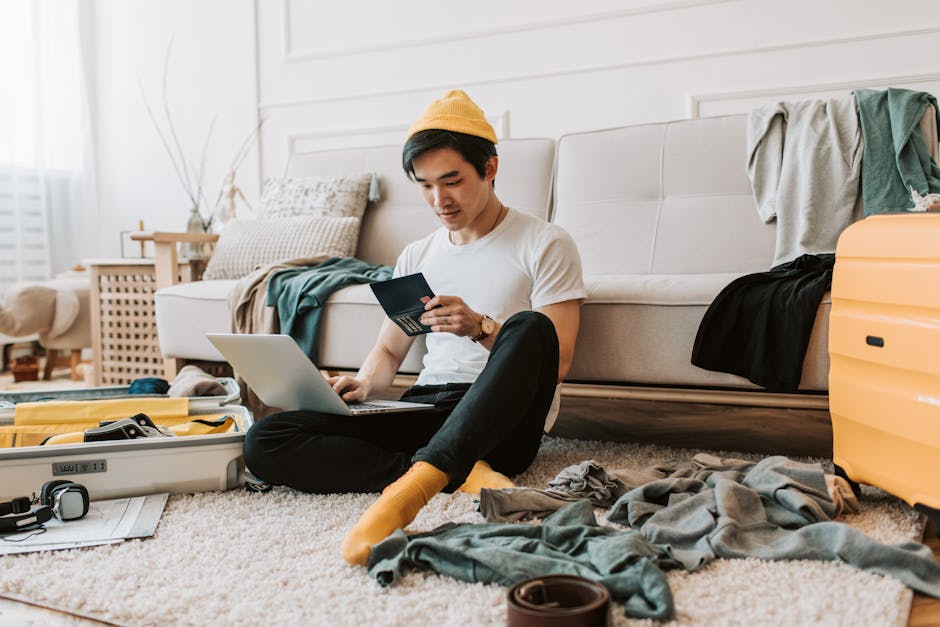
This is the mathematical solution to overpacking. I used to stare at my bed covered in clothes and feel paralyzed. Now, I just follow the numbers. The 5-4-3-2-1 rule is a framework that ensures you have enough variety for a week (or even a month if you do laundry) without crossing into the territory of “checked bag” territory. It keeps your decisions simple and your bag light.
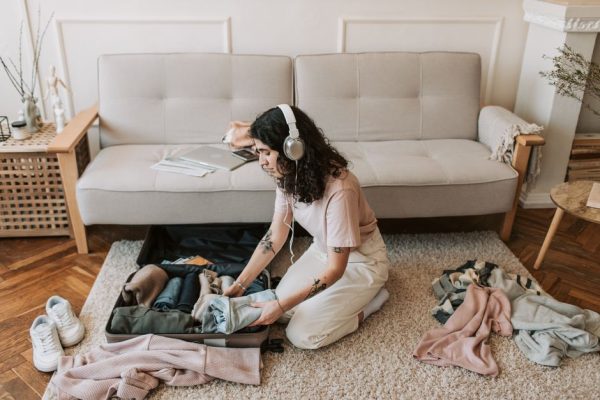
The breakdown works like this: five sets of socks and underwear, four tops (mix of t-shirts and one button-down), three bottoms (one pair of jeans, one pair of chinos or tech pants, and one pair of shorts), two pairs of shoes (one on your feet, one in the bag), and one hat or accessory. This might sound restrictive, but if you choose a cohesive color palette—think navies, greys, and blacks—every single item will match every other item. This creates dozens of outfit combinations from just a handful of pieces.
Breaking Down the 5-4-3-2-1 Categories
- 5 Socks/Underwear: Opt for synthetic blends or merino. They take up almost no space and can be washed in a sink and dried overnight.
- 4 Tops: Two t-shirts, one long-sleeve layer, and one “nice” shirt for dinners. Avoid bulky hoodies; use a lightweight down jacket if it’s cold.
- 3 Bottoms: Wear your heaviest pair (usually jeans) on the plane. Pack a pair of versatile tech pants like the Lululemon ABC Pant ($128). Pro: incredibly comfortable and looks like a dress pant. Con: expensive for what is essentially polyester.
- 2 Shoes: One pair of comfortable walking sneakers and one pair of slightly dressier boots or clean leather sneakers.
- 1 Accessory: A versatile scarf or a baseball cap depending on the climate.
Which packing cubes are actually worth the money?
I’ll be honest: I used to think packing cubes were a scam. I thought rolling my clothes was enough. I was wrong. Packing cubes don’t necessarily save a massive amount of space—though compression cubes do—but they provide organization that saves your sanity. When you’re living out of a backpack for two weeks, being able to pull out the “socks and underwear” cube without exploding the rest of your gear is a massive win.
The Peak Design Packing Cubes (approx. $30-$40) are the best I’ve tested. Most cubes use cheap zippers that catch on the fabric. Peak Design uses a proprietary ultra-light ripstop shell that feels like silk but is incredibly durable. They feature a secondary compression zipper that squishes the air out, and a dedicated dirty clothes compartment on the back. The pro is the expansion/compression feature; the con is that they are significantly more expensive than the generic sets you find on Amazon. If you’re on a budget, the Eagle Creek Reveal series is a solid alternative for about $15 per cube, offering great visibility through the mesh but lacking the compression power of the Peak Design models.
Pro Tip: Don’t buy a 10-piece set of cubes. You really only need one medium for main clothes, one small for underwear, and perhaps a dedicated tech pouch. Over-organizing leads to wasted space between the cubes.
What should be in a minimalist travel toiletry kit?
This is where most packing lists fail. People bring full-sized bottles of shampoo or massive electric toothbrushes that take up a quarter of their bag. If you’re traveling for less than two weeks, you do not need 12 ounces of hair gel. The goal here is to minimize liquids to avoid the dreaded TSA secondary screening and to keep your kit light enough that it doesn’t weigh down your bag.
I highly recommend switching to solids wherever possible. Solid shampoo bars and toothpaste tabs are life-savers. Not only do they not count toward your liquid limit, but they also can’t leak and ruin your clothes. For the liquids you must bring, use the Matador FlatPak Toiletry Bottles (approx. $13 each). They are made of a flexible fabric that shrinks as you use the product, making them much more space-efficient than rigid plastic bottles. Pro: they are TSA-approved and incredibly light. Con: the fabric can sometimes retain the scent of the previous product even after washing.
Toiletry Kit Checklist
- Solid Shampoo/Soap: Ethique or J.R. Liggett’s are great options.
- Deodorant: Stick to a small travel-sized version.
- Oral Care: A folding toothbrush and a small tube of concentrated toothpaste like Marvis.
- First Aid: A few Band-Aids, ibuprofen, and some moleskin for blisters. Don’t bring the whole pharmacy.
- Sunscreen: A solid stick version is better for carry-on limits.
How to pack electronics and cables without tangles?
The “tech nest” is a real problem. You reach into your bag for a charging cable and pull out a knotted mess of white plastic. My solution has been to consolidate everything into a single tech organizer. You want something with elastic loops and small pockets. I use the Bellroy Tech Kit (approx. $55). It’s a bit of an investment, but the recycled fabric and the way it zips flat make it very easy to slide into the front pocket of a backpack. Pro: beautiful aesthetics and great organization. Con: it’s relatively small, so it won’t fit a large power brick for an older laptop.
To keep the actual gear light, I swapped all my individual chargers for a single high-wattage GaN (Gallium Nitride) charger. The Anker 735 Charger (approx. $40) has two USB-C ports and one USB-A port. It’s small enough to fit in the palm of your hand but powerful enough to charge a laptop, a phone, and headphones all at once. This eliminates the need for three separate bulky plugs. Also, carry a small power bank. The Nitecore NB10000 (approx. $60) is the lightest 10,000mAh battery on the market. It’s made of carbon fiber and weighs almost nothing, which is critical when you’re trying to stay under those strict 7kg weight limits on European budget airlines.
What are the best versatile shoes for multi-climate travel?
Shoes are the heaviest and bulkiest items in your packing list. If you get this wrong, you’ll be miserable. I’ve seen people try to hike in flip-flops or wear heavy hiking boots to a nice dinner in Paris. Neither works. You need shoes that bridge the gap between performance and style. For most trips, a pair of clean, minimalist sneakers is the answer. I’ve had a lot of success with Allbirds Tree Runners (approx. $100). They are breathable, machine washable, and look decent enough for most casual restaurants. Pro: incredibly lightweight and comfortable for all-day walking. Con: they provide almost zero lateral support and are not waterproof.
If you’re heading somewhere rainy or slightly more rugged, the Blundstone 585 Chelsea Boots (approx. $210) are a legendary choice. They are tough enough for a light hike, completely waterproof once treated, and they look great with jeans for a night out. They are heavy, though, so you must wear them on the plane. Never pack your boots; always wear them. Your second pair of shoes should be something flat and light, like a pair of Xero Shoes or even just a high-quality pair of flip-flops like Olukai, which provide actual arch support unlike the cheap rubber ones from the drugstore.
How to manage laundry and clothing maintenance on the road?
The secret to traveling indefinitely with a carry-on is doing laundry. You don’t need a washing machine. I carry a small Sea to Summit Pocket Laundry Wash (approx. $6), which is a pack of 50 dry soap leaves. You just fill a sink, drop a leaf in, and wash your essentials. It takes ten minutes before you go to bed, and by morning, your merino socks and synthetic underwear are dry and ready to go. This is why fabric choice matters so much—if you brought cotton, you’d be carrying wet socks in a plastic bag the next day.
For drying, I’ve found that the “towel roll” method is superior to any travel clothesline. Lay your wet garment on a dry hotel towel, roll the towel up like a burrito, and stand on it. The towel absorbs 90% of the moisture, and the garment will dry in a few hours. If you’re staying in one place for more than three days, it’s worth finding a local “wash and fold” service. In places like Thailand or Mexico, you can get an entire bag of laundry cleaned, dried, and folded for about $5. It’s the best money you’ll spend on your trip. It allows you to reset your 5-4-3-2-1 cycle and keeps your bag smelling fresh.
Packing light isn’t about deprivation; it’s about freedom. When you can walk off a plane, bypass the baggage claim, and be on a train toward the city center while everyone else is still waiting for their suitcases, you’ll understand why this list matters. It takes a bit of discipline to leave that extra “just in case” jacket at home, but your shoulders will thank you three miles into your walk to the hotel.